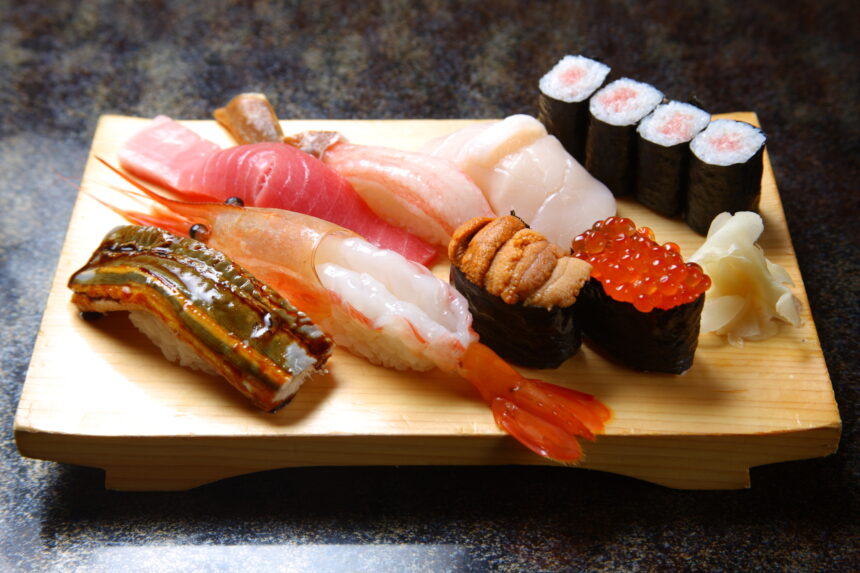
What are the characteristics of Edomae Sushi?

sushi

What are the characteristics of Edomae Sushi?(Edomaezushi)

old name of Tokyo

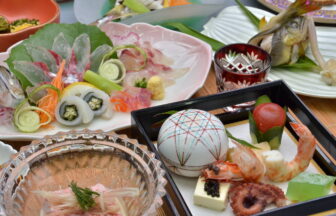
Edomae-zushi is the prototype of today’s nigiri-zushi and is said to have been perfected by Hanaya Yohee in the late Edo period. It was first served at yatai (food stalls) so that impatient Edo people could fill their bellies in a jiffy. In the beginning, sushi was two to three times the size of today’s sushi. Prior to that, the most common type of sushi was “box sushi,” which originated in the Kansai region and consisted of sushi rice and ingredients pressed together in a box. The word “Edomae” originally meant to use fish caught in front of Edo (present-day Tokyo Bay), and since there was no technology for refrigerated storage and transportation was not developed at that time, sushi was prepared in such ways as vinegared, pickled, and boiled to keep it fresh for a long period of time. Typical examples are marinated tuna, boiled sea eel, and vinegared kohada.

新着・おすすめ情報

  1. showy collar

  2. Tips for enjoying “summer kimonos” in a cool and fashionable way.

  3. Anyone can do it by themselves! Basic yukata dressing – women’s version

  4. A Walk in Edo with Old Maps] No. 6: Kagurazaka is full of historical attractions. From alleys where you can feel the Edo period to wooden buildings of the Showa period

  5. Founded by a “Brush Master” who was a personal assistant to the Tokugawa Shogun. Edoya” has been providing brushes and bristle brushes for 300 years.

  6. semi-formal kimono for women

  7. What are the characteristics of “unfiltered” sake? Words related to sake

  8. Takahata Fudo Kongoji Temple

  9. Yagenbori Fudoin (Nihonbashi, Tokyo)

  10. Meishu no Taki Park (Oji, Tokyo)

  11. Developing original materials with attention to detail, starting from the fabric. Shukusen, a long-established manufacturer of yukata loved by kabuki actors in the Edo period [Part 1

  12. Tokyo Station Hotel (Marunouchi, Tokyo)

  13. 8220;Sake Samurai”s Tour of Tokyo’s Long-established Sake Breweries with Yuki Aoi

  14. buckwheat mash (buckwheat flour in hot water served with shoyu)

  15. Ruins of the Tokugawa family residence of the Kii Wakayama domain (Kioicho, Tokyo)