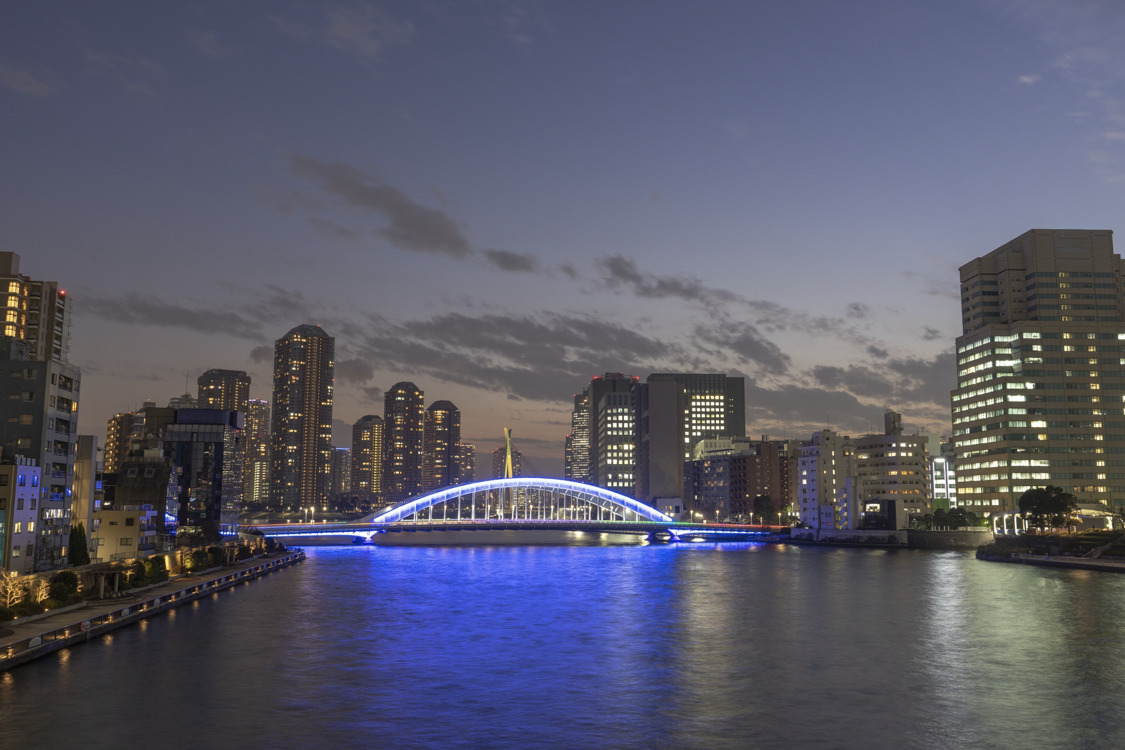
Eitai Bridge

historic siteMonzennakacho, Kiyosumi-Shirakawa

Eitai Bridge(Eitai-bashi)

performance or narrative based on the story of Loyalty to the Emperorbridgeimportant cultural property

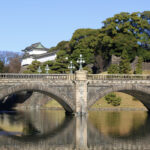
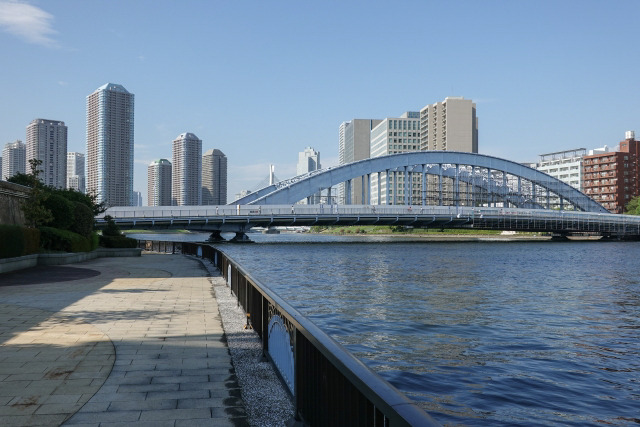
This bridge spans the Sumida River, connecting Shinkawa in Chuo-ku, Tokyo and Eitai in Koto-ku, Tokyo. The first bridge was built in 1698, originally about 150 meters upstream from the current location. It is famous for the Ako Ronin who crossed the bridge on their way back to their homes. The current bridge was replaced by the Imperial Reconstruction Bureau after the Great Kanto Earthquake, and was completed in 1926. It is a steel bridge for earthquake and fire resistance. The 185-meter-long tied-arch bridge has a stately design because it is the “Gate of the Imperial Capital” at the entrance to the Sumida River. It is illuminated from sunset to 9:00 p.m., creating a beautiful night view. It is designated as a National Important Cultural Property.

Spot OutlineOutline

address (e.g. of house) Shinkawa 1-chome, Chuo-ku to Eitai 1-chome, Koto-ku
Access 12 minutes from Monzennakacho Subway Station

Founding and opening of business 1698 (11th year of Genroku)

新着・おすすめ情報

  1. Tokyo Literature Walk] No. 1: Walking around Asakusa, a treasure house of modern literature

  2. What vegetables should not be used in “vegetarian cooking” without animal products?

  3. Customer information is written down in a notebook and shared with all staff. Ginza Mikawaya’s commitment to hospitality

  4. What is kaiseki ryori? What is the difference between kaiseki ryori and kaiseki cuisine, and which is eaten at a tea ceremony?

  5. bones left after cremation (esp. those of a Buddha or Boddhisatva)

  6. one-piece sash

  7. sweet dumpling made with mochi flour and (sometimes) millet flour (famous product of Okayama)

  8. soup served at the end of a traditional Japanese dinner

  9. various

  10. A Walk in Edo with Old Maps] No.3: Once the Best Shopping Zone in Edo. Tracing the Traces of a Fish Market in Nihonbashi

  11. 日本橋

  12. Shokado bento” is a shortened form of “kaiseki” cuisine. Kaiseki” or “Kaiseki”?

  13. Ichigaya Kameoka Hachiman Shrine (Ichigaya, Tokyo)

  14. Koishikawa Botanical Garden

  15. The same manufacturing method since the establishment of the company. Interview with Satoru Nakamura, 7th generation owner of Shirokiya Nakamura Denbei Shoten, who weaves Edo brooms using craftsmanship passed down from generation to generation .