

historic siteconstructionMonzennakacho, Kiyosumi-Shirakawa
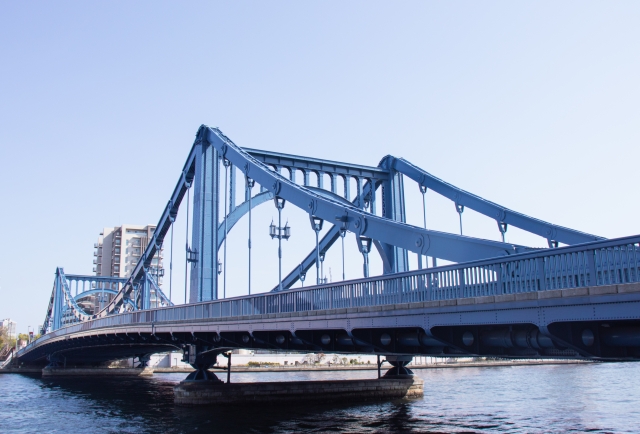
Kiyosubashi Bridge (Kiyosumi-Shirakawa, Tokyo)(Kiyosu Bridge)
(architectural) floodlightingimportant cultural property
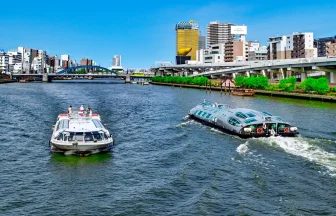
Since the Edo period, transportation on both banks of the Sumida River has been by ferry, but a new bridge was built in 1928 as part of the reconstruction of the Imperial Capital after the Great Kanto Earthquake. The bridge was named “Kiyosubashi” because it connected Kiyosumi-cho in Fukagawa-ku and Nakasu-cho in Nihonbashi-ku at the time of construction. The bridge is 186.2 meters long and 25.9 meters wide, and is characterized by its beautiful curved shape. It is said to be modeled after the German Hindenburg Bridge, a suspension bridge over the Rhine River. The bridge, which also makes full use of cutting-edge bridge technology, is designated as a National Important Cultural Property. It is also illuminated when the sun goes down, making it a popular photo spot.
Spot OutlineOutline
| address (e.g. of house) | Kiyosumi 1 (East bank), Koto-ku, Tokyo |
|---|---|
| Access | 7 min. walk from Kiyosumi-Shirakawa Subway Station or 9 min. walk from Suitengu Subway Station |
| External Links | |
| Founding and opening of business | 1928 (Showa 3) |