

temple (Buddhist)Azabu, Akasaka, Roppongi
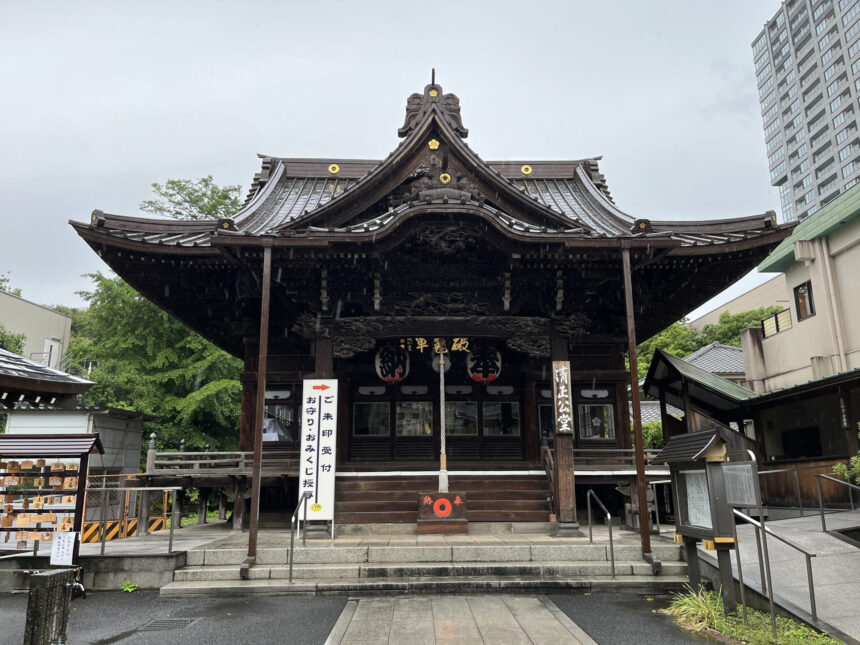
Kakurinji Temple (Shirokanedai, Tokyo)(Kakurinji Temple)
Kiyomasa KatowalkNichiren school of Buddhismtangible cultural propertiesVaisravana (guardian god of Buddhism)Lord Kiyomasa (shogun)
This is a temple of the Nichiren sect of Buddhism founded by Priest Nichinen in 1631. It is called “Seisho Ko” (Lord Kiyomasa) because the tablets and statues of Kiyomasa Kato are enshrined there, and it has been worshipped as a temple for prayers for victory. Every year on May 4-5, the Seisho Kou Grand Festival is held, where the statue of Seisho is unveiled and victory charms with iris leaves are distributed. The temple was destroyed by fire once, but the gate was rebuilt in 1856, and the hall of worship and the hall of offerings were rebuilt in 1865. Both are now designated as tangible cultural properties of Minato Ward. The temple also enshrines Bishamon, one of the seven original Yamate deities of good fortune, and is visited by many worshippers.
Spot OutlineOutline
| address (e.g. of house) | 1-1-47, Shirokanedai, Minato-ku, Tokyo |
|---|---|
| Access | 5 minutes walk from Shirokane-Takanawa and Shirokanedai subway stations. |
| phone | 03-3441-9379 |
| Business Hours | 9:00 – 17:00 (red seal application hours) |
| Founding and opening of business | 1631 (Kan’ei 8) |