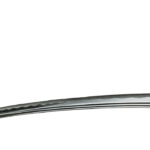
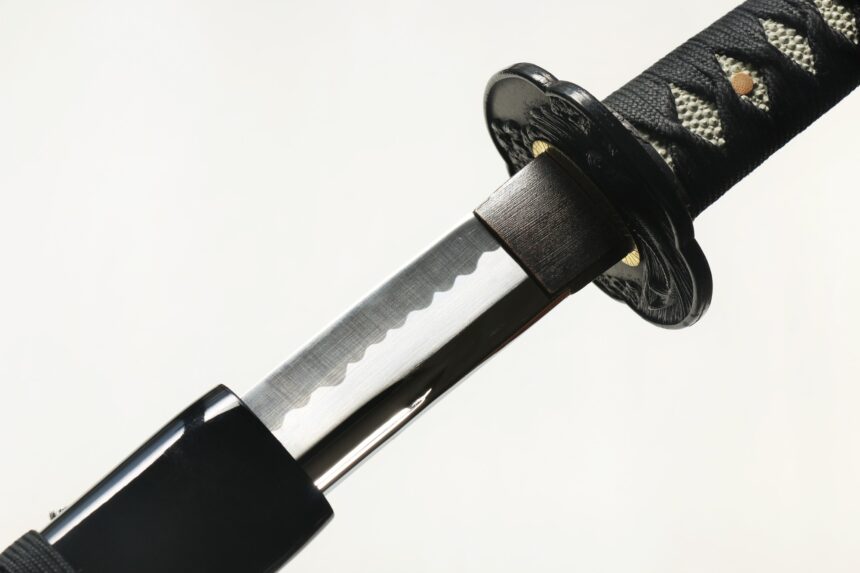
metal collar mounted between a sword blade and the hand guard

armour

metal collar mounted between a sword blade and the hand guard(habaki)

Japanese sword

Koshirae is a type of sword armoring that is used to make up a sword’s armor. It is one of the sword accessories that make up the sword’s exterior, such as the scabbard and hilt, and is a cylindrical metal fitting that is attached to the point where the sword blade meets the tsuba (metal fitting that is attached between the sword blade and the hilt). It is a cylindrical metal fittings that is attached to the point where the sword blade meets the tsuba (metal fittings that are attached between the sword blade and the hilt). It is also called a metal collar with a metal collar. When a sword is placed in a scabbard, it prevents the sword blade from falling out of the scabbard or from colliding with the scabbard. The surface is often engraved with family crests and other family crests, and is loved around the world as an art craft. For practical use, it is best to use copper, but for appreciation, swords are made of solid gold, solid silver, or gilt (tokkin, gold-plated), which are more expensive. For appreciation, however, expensive materials such as “solid gold,” “solid silver,” or “gilding” are often used.

新着・おすすめ情報

  1. Sarugakuzuka Tomb (Daikanyama, Tokyo)

  2. Ruins of Otama-ga-ike Pond

  3. Namikaze Shrine (Tsukiji, Tokyo)

  4. polearm

  5. Inheriting the craftsmanship of making each toothpick one by one. Commitment to “Nihonbashi Saruya,” the only toothpick specialty store in Japan

  6. fresh Western sweets (usu. containing cream or fruit, e.g. sponge cake, pie)

  7. Shiba Grand Shrine (the inner shrine of Ise Shrine)

  8. Katori Shrine, Kameido, Tokyo

  9. Expressing a unique taste using ingredients that can be found anywhere. The long-established Kimuraya Honten Ningyo-yaki store’s commitment to quality

  10. short sword

  11. Shimonotani Ruins Park (Higashifushimi, Tokyo)

  12. Toyokawa Inari Tokyo Betsuin (Akasaka, Tokyo)

  13. rolled sushi with rice and other ingredients

  14. Tokyo Literature Walk] No.5: Literary figures of the Showa period settled in Shimokitazawa one after another. Why Shimokitazawa became a town of culture

  15. Horikirishobuen (Horikiri Shobuen, Tokyo)