

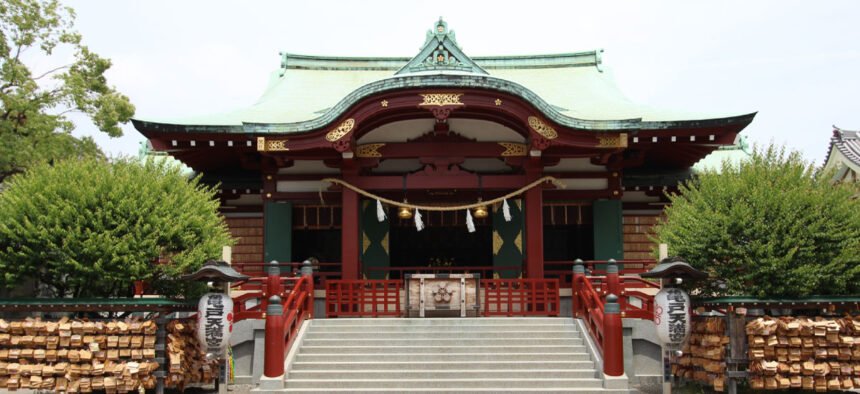
Kameido Tenjinja Shrine (Kameido, Tokyo)(Kameido Tenjin Shrine)
arched bridgewalkHiroshige Utagawaseasonal festivalSugawara no Michizane
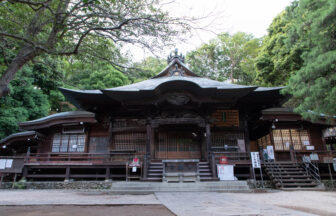
This shrine enshrines Sugawara no Michizane (Ama-no-Okami). It is said that Nobusuke Otorii, a descendant of Sugawara no Michizane, enshrined him. In front of the Otorii gate, there is a Shinji Pond, and two drum bridges and one flat bridge span the distance to the main hall of the shrine. These bridges represent the past, present, and future, respectively, and were built in imitation of Dazaifu Tenmangu Shrine, as crossing the three bridges is said to purify the mind. The Taiko-bashi Bridge, in particular, has long been known as a scenic spot, so much so that it was depicted in Utagawa Hiroshige’s “Meisho Edo hyakkei” (One hundred Famous Views of Edo). The shrine is still popular for its plum blossoms, wisteria and chrysanthemums, as well as for its festivals such as “Usohae Shinji,” a ritual in which bad events are replaced by good ones, and “Setsubun Tsuina Matsuri,” a festival in which priests and demons hold a question-and-answer session.
Spot OutlineOutline
| address (e.g. of house) | 3-6-1 Kameido, Koto-ku, Tokyo |
|---|---|
| Access | 15 minutes from JR Kameido Station and Kinshicho Station |
| phone | 03-3681-0010 |
| Business Hours | 8:00-18:00 (reception at the shrine office) |
| External Links | |
| Founding and opening of business | 1662 (Kanbun 2) |