

Shinto shrineNihonbashi (bridge)
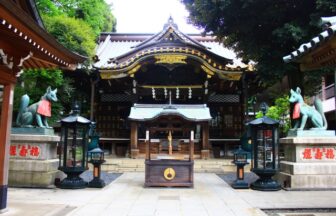
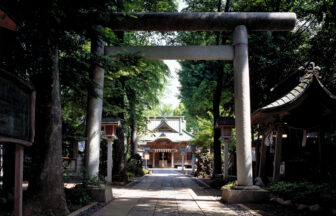
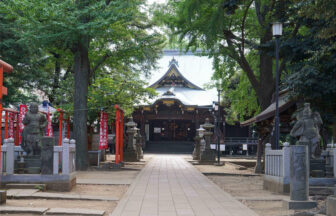
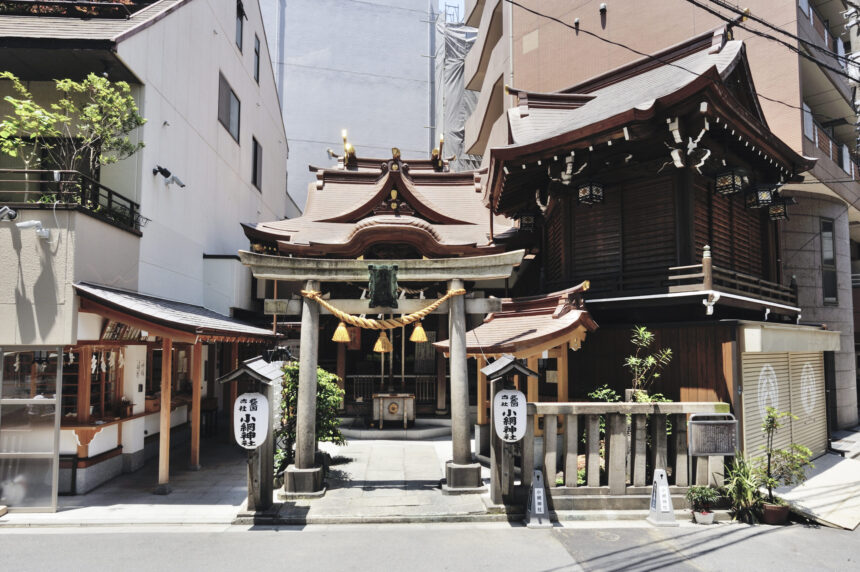
Koami Shrine (Ningyocho, Tokyo)(Koami-jinja (Koami-Shrine)
Seven Gods of Fortunewarding off evilBenten (goddess of arts and wisdom)walktall headed god of happiness, wealth, and long lifewashing the money (laundering)
It is said that the origin of this shrine dates back to 1466, when Inari Daijin was enshrined and an epidemic was quelled. In 1929, Komasaburo Naito, a master carpenter who served as chief engineer for the construction of Meiji Shrine, built the shrine and Kaguraden (music and dancing hall). It is the only remaining prewar wooden shrine building in the Nihonbashi area, and features magnificent carvings of “ascending dragons” and “descending dragons. There is also a statue of Benzaiten, a statue of Fukurokuju, one of the seven gods of good fortune of Nihonbashi, and a “sen-arai-benten” (well for washing money), and it is popularly known as “Tokyo sen-arai-benten,” which brings good luck for money.
Spot OutlineOutline
| address (e.g. of house) | 16-23 Koamicho, Nihonbashi, Chuo-ku, Tokyo |
|---|---|
| Access | 5 min. walk from Subway Ningyocho Station, 10 min. walk from Subway Suitengumae Station |
| phone | 03-3668-1080 |
| regular closing day | nashi (Pyrus pyrifolia, esp. var. culta) |
| External Links | |
| Founding and opening of business | 1466 (first year of Bunsho era) |