Asakusa (department store)paper lantern
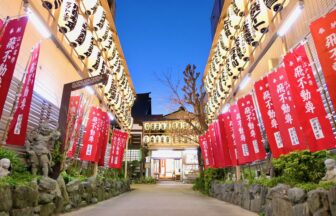
Chochin, traditional Japanese chic lights that brightly illuminate the eaves of festival streets, shrines and temples, stores, and theaters. Since 1854, seven generations of Yoshinoya’s lanterns have been used at the Kabuki-za Theater, Naritasan Shinshoji Temple, Kanda Festival, Mitamatsuri Festival, and many other events. Yoshinoya’s lantern production began as a “samurai’s inside job. We interviewed Ms. Yuiko Yoshino, the daughter of Kiichi Yoshino, the seventh generation Yoshinoya owner, who is in charge of public relations and sales at Yoshinoya, about the company’s history, innovations, and important ideas.
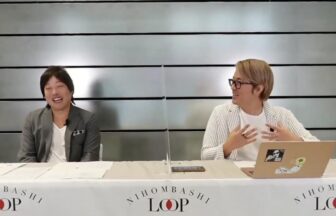
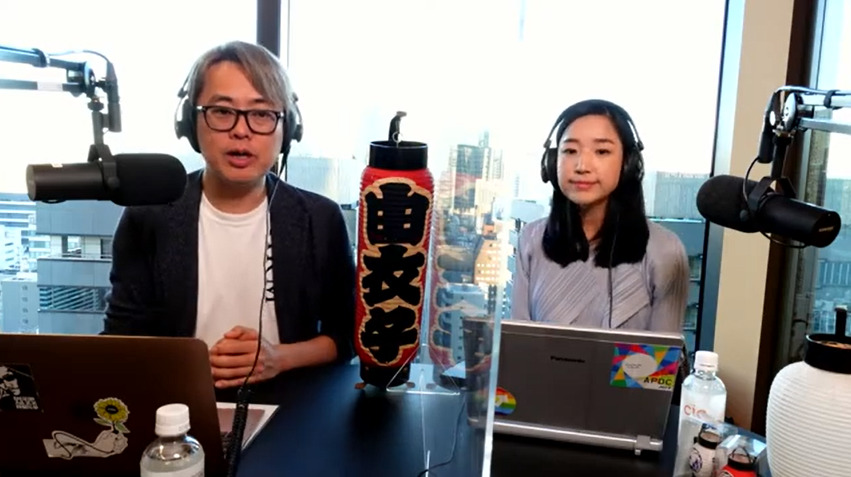
Today we are pleased to have with us Ms. Yuko Yoshino, from Yoshinoya Shoten’s Public Relations and Sales Department. Could you please begin by introducing your store?
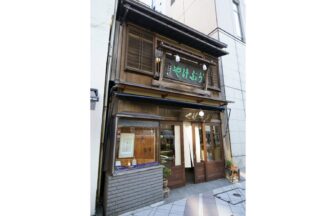
Since 1854, 169 years ago, we have been operating in Sakuma-cho, Kanda, near what is now Akihabara Station.
Yoshinoya’s founder, Yoshino Zensuke, was a family man who began making lanterns as a side job to support himself. He started making chochin (paper lanterns) as a side job to earn money to support himself. During the Edo period, prices were rising, and for 250 years, the family stipend (salary) did not increase, so samurai had to work part-time to make ends meet. This is a bit like Japan today (laughs).
A samurai’s inside job, so to speak, is like a side job nowadays (laughs).
Next, I would like to introduce Kihei Yoshinoya, the third generation of Yoshinoya, whose store was the most prosperous of all. After the Russo-Japanese War, lantern parades with the national flag and Hinomaru lanterns were held in various places, and many of our lanterns were used. This is my grandfather wearing a bow tie, which was rare at the time, strutting along the foot of the Nihonbashi bridge.
It’s cool!
The photo on the left is when we presented an award to an employee who has been with us for 10 years. As you can see, he is wearing a crested hakama. I feel a little sorry for the current employees because we do not do this kind of thing nowadays.
And what is this picture here?
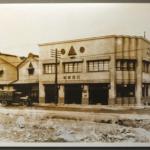
This is a picture of the store before it was burned down in an air raid during the prewar and wartime periods. Lanterns are quite bulky, so we had a large warehouse for storage. We used to deliver them by rear-drawn cart, but according to a fellow lantern maker, “Yoshinoya-san was making a lot of money, so they used to come on Harleys and motorcycles.
Also produced lanterns like ad balloons
That’s great. And then?
When we had an event at a department store, we received an order for a large lantern to serve as a kind of “ad balloon” for the event, and everyone is taking a picture in front of it.
Very nice. Can you still make these?
We are still making them. The Kabuki-za Theater also displays lanterns of a similar size to this one.
That’s cool.
Next is a picture of Kihei III’s funeral. We received many wreaths of flowers from everyone in recognition of his hard work during his lifetime, and we were asked, “Were you invited to “Laugh It Up! I was almost asked, “Did you get invited to ‘Laugh It Away! (laugh).
And that Kihei is ……?
Yes, it became very famous and was the model for a novel serialized in Asahi Weekly during the war titled “Gekketsu Chochin” by Minoru Nakano. It was later adapted for the stage, and the year before it was bombed, it was also performed at the Meiji-za Theater.
Next is a photo of my father, Kiichi Yoshino VII.
He is a very cool guy, and he’s very dashing.
But I’m a sweetheart who can’t drink.
Where do you like your sweets?
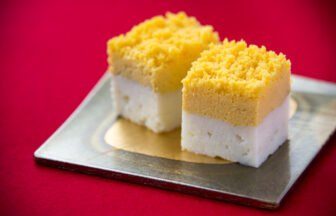
My father ate about three pieces of bean jam from “Umezono,” which is featured in a Japanese long-established restaurant, a box of manju from “Shioze,” a bottle of yokan from “Toraya,” and he also likes “Garigarikon,” a Japanese sweet made from skinny jeans. This was when my father was very young. This is a picture of the celebration with lanterns when His Majesty the Emperor became the Crown Prince.
After working as a Japanese language teacher, became a public relations manager for a well-established company
So far, we have heard about the history of your restaurant. Next, please introduce yourself, Mr. Yoshino.
My name is Yuko Yoshino, daughter of Kiichi Yoshino VII. I love Japanese culture such as lanterns, and after studying literature of the Edo period in graduate school, I worked as a Japanese language teacher at junior high and high schools. Now I work as a public relations and sales person for Yoshinoya, where I have access to places that interest me, such as the Kabuki-za Theater and festivals.
You graduated from school and worked as a Japanese teacher before coming to work at the restaurant. We have talked to nearly 70 long-established people since we started the program, but this is the first time I have talked to a Japanese teacher. Was it your interest in history that led you to become a teacher?
Yes, I am. I’m a bit of a nerd and I love Kabuki. I was a Japanese language teacher because I wanted to study such Japanese culture, but then I realized, “Well, maybe I can get closer to it if I work at our company. (laughs).
You can get awfully close (laughs). When you were in school, etc., were you aware that you would be working at your parents’ house?
We lived above the store, so it was a regular occurrence for me to go downstairs and see my father drawing letters on the lanterns and me using a stopwatch to measure the time. He would say, “Wow, that’s great! I’ve broken one minute!
Each of these lanterns is hand-painted, right?
We still finish each piece by hand.
That’s great. Does such a Yoshinoya have a family motto?
That’s what I’ve been asking around at …… and it doesn’t seem to be there.
In fact, surprisingly, about 80% of the people who appeared on this program said that they do not have a family motto. I guess it is the long-established shops that naturally develop a kind of family motto in their daily lives and carry on the goodwill of the family.
Craftsmen say that no one taught them how to do their work in words. It is like “learn by watching.
Is that still the case?
The people who have joined us now are learning their work through practice by watching and being told to “try it out. Many craftspeople whose livelihood depends on working with their hands are taciturn and don’t talk about unnecessary things.
I understand that feeling. I, too, like to steadily work on what I have in front of me. I used to like collecting old books and used to go to an antiquarian bookstore in Kanda Jimbocho, but I couldn’t afford expensive books that cost 30,000 yen or 50,000 yen in the past. So I started my own business partly because I wanted to buy books without hesitation. So I am very grateful that I am able to make it my business to listen to the stories of all the old shops and disseminate them.
It is nice to know that there are people who are willing to share their experiences with us, as long-established businesses tend to be proud that they don’t have to communicate so much.
Many of the long-established businesses are modest, and I don’t think their greatness has yet been conveyed to the public, so someone like me is stepping up to the plate to talk to them. So, I am asking for everyone’s support in this endeavor.
Chochin (paper lanterns) started out as “a domestic job for samurai warriors. Today, they have become part of traditional Japanese culture and are also gaining popularity overseas. In the second part of this article, we will look at the innovative approach taken by Yoshinoya Shoten.
latter part(temporal or logical sense) follow …
*If you would like to see this dialogue on video.here (place close to the speaker or where the speaker is)