Asakusa (department store)doll-shaped pancake filled with bean jamsouvenir from Asakusa
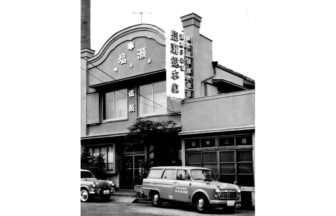
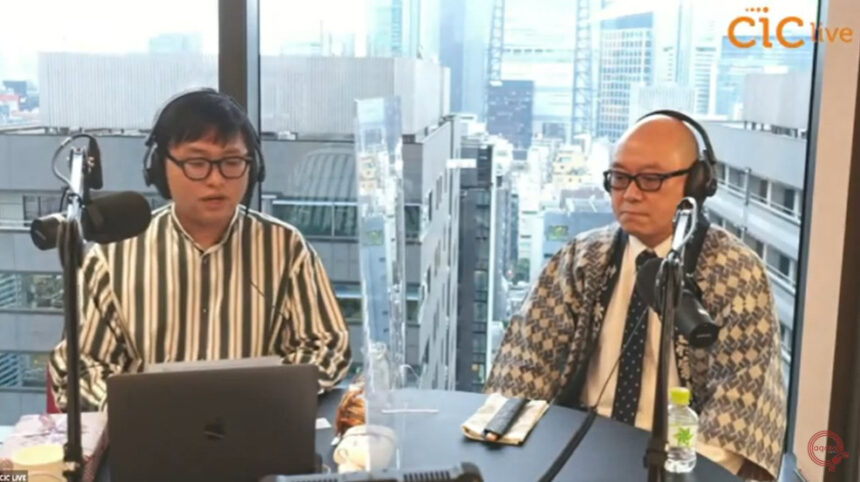
Kimuraya Honten is a ningyoyaki store located right in front of Sensoji Temple. Founded in Keio 4, it is a long-established shop with distinctive doll-shaped dolls: a dove, a lantern, a five-story pagoda, and a thunder god. What kind of history has the store, which continues to be loved in Asakusa, had and will continue to have in the future?With Kenichi Saito, cultural entrepreneur,We interviewed Mr. Jun Kimura of Kimuraya Honten.
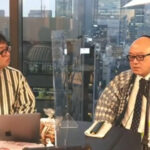
Mr. Saito:Today we will talk to Mr. Jun Kimura of Kimuraya Honten. If you visit Asakusa, I am sure there is no one who does not know you, but please introduce yourself.
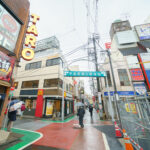
Mr. Kimura:My name is Kimuraya Honten, and I bake doll yaki right in front of Sensoji Temple in Asakusa. The company was founded in Keio 4, which is over 150 years ago. There are several ningyo-yaki shops in the Nakamise-dori shopping street, but our store is a small store located at the very end of the street when you walk from Kaminarimon toward Sensoji Temple.
Mr. Saito: Could you also introduce your restaurant?
When you think of Ningyo-yaki, you probably imagine the faces of the Seven Gods of Good Fortune or dolls, but ours is characterized by the shapes of a dove, a lantern, a five-story pagoda, and a thunder god. The first generation of the shop invented this idea because it symbolizes Asakusa. We have a baking table in the back of the store, where the molds are actually turned as they are baked.
It’s been the same shape since the first generation.
Mr. Kimura: That’s right. It is now called “Ningyo-yaki,” but in the beginning it was marketed as “Meisho-yaki.
Mr. Saito: I heard that since that time, there were some with anko (sweet bean paste) and some without.
Yes, I have. The type without red bean paste is also popular among young people.
Helping” in childhood led to an awareness of the family business
Saito-san: Can you tell us about yourself, Mr. Kimura?
I was born in 1969, and I have been running around and playing in the precincts of Sensoji Temple since I was a child. My mother and grandfather were busy running the store at the time, and I was told to stay outside and not to come home until dark (laughs).
How did you see the house at that time?
I didn’t have much of a sense of being an old family. Since many of the families in the area were in business or running businesses, all of my friends were told to go out and do the same, so I had no trouble finding friends to play with.
What kind of games were you playing at that time?
We kicked cans and played color tag in the park, and went to various places by bicycle. I even went to the Korakuen Stadium at that time and rode around in a circle.
I understand that both of your parents were busy in the store; did they help you in any way?
Now that I think about it, helping out with wrapping when I was in elementary school or so may have been what got me started in this business. When I was in high school, the ski club started spending a lot of money on equipment and lodging, and I was told that if I helped out, I would get a raise in my allowance. So I worked hard on Sundays, and before I knew it, the whole process of doll-making had become ingrained in my body.
We often hear from long-established businesses that they received an allowance for helping out.
That’s right. If someone offered me an allowance, I would help out, wagging my tail. But thanks to that, I was able to easily enter the industry when I made it a full-fledged profession. As I worked with the craftsmen, I gradually learned the techniques of pottery making.
By the way, did you have any choice but to pursue other paths after graduating from college?
I was a student in college longer than anyone else, and at the end of my 24th year, my parents told me to get a life (laughs). At the time, the bubble economy had burst and there were many job refugees, so I had no other choice but to take over the doll-shaped bakery.
What did you learn when you first joined the store at the age of 24?
Ms. Kimura: Just as when I was earning an allowance, I worked as an assistant to the artisan and prepared the sweets in the morning. Making sweets is surprisingly hard work. Lifting 30 kilograms of white sugar and putting it in the mixer was a bit of weight training. I was in my 20s and physically strong at the time, so I took the initiative in doing such work. I have lived in Asakusa since I was a child, so when I stand in front of the store, familiar faces usually pass by. They would say to me, “You look so serious today,” as I learned the trade.
It is like a store that is loved by the town. Is there a family motto that has been passed down from generation to generation?
As I mentioned earlier, I was not told by my parents to do anything in this way, so I have to create the family motto from now on. Ningyo-yaki is a symbol of Asakusa, so we must ensure that it never dies out. For this reason, I would like to be actively involved in festivals and other events to enliven Asakusa. That is one of the things I would like to convey in the future.
Serving Ningyo-yaki in front of Sensoji TempleThe Kimura Family Head Store. The current owner took over the family business after helping out when he was a child. Although people tend to have an image of “strictness” when they hear the word “long-established business,” Mr. Kimura’s story conveys a relaxing atmosphere.
latter part(temporal or logical sense) follow …
*If you would like to see this dialogue on video.here (place close to the speaker or where the speaker is)