Ryogoku/Kameidotraditional crafttortoiseshell (of the hawksbill turtle)
Edo Tortoiseshell” is a beautiful pattern created by pasting together the shells of the taimai (Todo-fish) using only water, heat, and pressure. Overcoming the crisis of not being able to obtain raw materials due to the Washington Convention, the company is making daily efforts to keep the traditional technique alive in the future. Masakatsu Hayashi, representative of Starmark Corporation, which operates “agataJapan tokyo,” interviewed Kotaro Ishikawa, the seventh generation of the company.
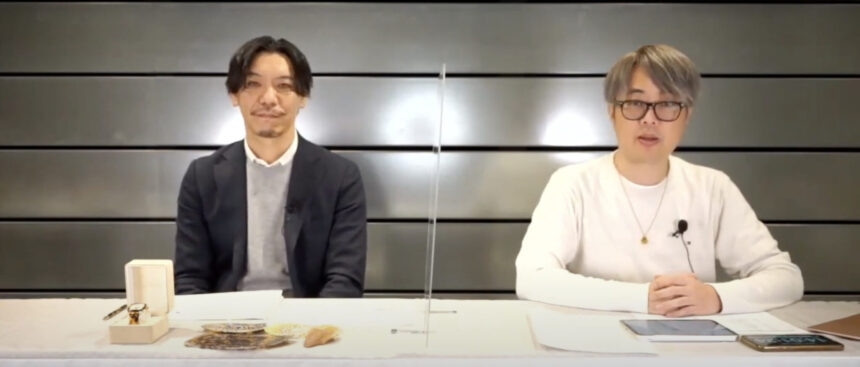
Hayashi: Today we are talking with Kotaro Ishikawa, the seventh generation of the “Ishikawa Tortoiseshell Factory.
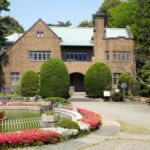
Mr. Ishikawa: My name is Kotaro Ishikawa, the seventh generation of “Ishikawa Tortoiseshell Manufacturing Co. Our company was founded in Nihonbashi Bakurocho in 1802 and is now in its 221st year. Our factory is located in Kinshicho, Sumida-ku, Tokyo. We have a directly managed store in Kameido, which opened in 2011. We opened this store with the intention of offering tortoiseshell items that can be enjoyed by people of various generations. We also offer total services including repair of tortoiseshell products. We hope you will have a chance to visit us.
What is Edo Tortoiseshell? To connect to the future
Ishikawa: “Tortoiseshell work” is a craft made from the shell of a sea turtle called taimai. The history of tortoiseshell work in Japan is quite old, and it is believed to have been introduced from China during the Asuka and Nara periods, the period of the so-called Sui Dynasty envoys. After that, tortoiseshell flourished very much in Europe, and was introduced to Dejima Island in Nagasaki, where craftsmen competed with each other in their skills. And,1603It is said that the origin of our “Edo tortoiseshell” dates back to the time when the Edo shogunate was established in 1868.
Mr. Ishikawa:1688Around 1880, the technique of pasting together was introduced. At that time, it was called “taimai-zaiku” instead of “tortoiseshell. Accessories such as ornamental hairpins made with this taima-zaiku technique became explosively popular, especially in the flower districts, and spread to the general public. Incidentally, the reason why the name “tortoiseshell” was changed from “taima-zaiku” to “tortoiseshell” is related to the fact that taima-zaiku became a prohibited item due to the so-called “luxury prohibition”. As a result, the word “tortoiseshell,” which meant “shell of a softshell turtle,” was used and the work continued in secret. It is said that the name “Taimaizaiku” was changed to “Bekko” at that time. It has a rather interesting history.
Hayashi: There could have been a scene like that depicted in a period drama: “Oyokan-sama, this is tortoiseshell (instead of the forbidden tortoiseshell work),” or “Then there is nothing we can do about it” (laughs).
Mr. Ishikawa: This tortoiseshell work has been in a bit of a crisis even after the modern era.1992In 1964, the Washington Convention banned all imports and exports of the shell of the giant tortoiseshell turtle. Therefore, we, the tortoiseshell industry in Japan, started to cultivate them on Ishigaki Island, Okinawa, in order to maintain the supply of tortoiseshell shells. Now, we have reached a point where we can ensure a stable supply in the future, and I believe that tortoiseshell work using purely Japanese tortoiseshell shells will be created in the future. Ishigaki Island currently has about300The head taimai sea turtles are growing up. We are working as one in the industry to keep it going because it is the only hope to connect our future.
Hayashi: How do we get the raw materials and how do we keep the artisans who process them? It is a very big problem. I think it is a common problem for traditional crafts.
Production process of Edo tortoiseshell work / The key to beautiful tortoiseshell work is the selection of materials.
Mr. Ishikawa: Next, I will briefly explain the production process of watches using our original tortoiseshell.
(1) The key to “material selection” is pattern selection.
The first step is to choose materials. The key is to choose taimai shells with an image of the finished pattern in mind. Since the shell of the taimai is not man-made, each pattern is completely different.
(2) “Cut out” to multiple
After selecting the materials, “cutting out” is done. Thinking about what shape of fabric you want to make, cut out the material into multiple pieces using a thread saw.
(iii) “Roughing it.”
The material is “roughened” to remove large scratches on the material. Since it is a natural piece, the original material is very scratchy. This is then polished clean.
(4) “Shaving”
Then comes the “shaving” process. Shaving” is a very important part of tortoiseshell work, as it is the process of “laminating,” which is designated as a traditional craft technique.
(5) “Pattern Matching
Next is “pattern matching.2The pattern is matched while imagining what the pattern will look like when the two patterns are pasted together. This is where the creator’s skill and sense come into play.
(6) “Sticking together”
Then, “laminating” is performed. Unlike other sea turtles, the shell of the hawksbill turtle is made of a very strong material called “nikawashi. Using this quality, the shells are laminated together using water, heat, and pressure. This process is considered one of the most special techniques.
Hayashi: How many years does it take for the taimai to grow and become usable as a material?
Mr. Ishikawa: The hawksbill turtles we farm are about6It is designed to grow to a certain size in a year. To grow considerably larger10counter for years (following a number in the hito-futa-mi counting system)20I need a year.5We have created a technology that can be used as a material in years to years.
Hayashi: So that’s how you use the materials you have created.
Mr. Ishikawa: Yes. Then, after the “pattern matching” described earlier, the shell and shell are pasted together. The tortoiseshell plate is sandwiched between sheets of plywood while keeping it moderately moist to make it easier to dissolve the nikawak material. The tortoiseshell plate is then placed between the plywood and a steel plate and crimped in a vise. At this point, it is neither too strong nor too weak. This is where the most skill is shown.
Hayashi: It sounds like a lot of work. So it can be cracked.
Mr. Ishikawa: If you crimp too much, it will be crushed, and if you don’t, it won’t stick. This does not mean that the pressure should be applied in the same way every time. Our engineers vary the amount of pressure while considering the appropriate pressure for the material.
Hayashi: I see. It is the same thing as talking about the different amount of water each time when making soba noodles.
Mr. Ishikawa: That’s right. It is difficult and interesting that it cannot be put into a manual.
Hayashi: That’s where the value is.
Mr. Ishikawa: Then, we let it rest under pressure for about a minute. After that, we make sure that they are firmly pasted together and steam them quickly. The crushed material is heated again to fluff it up. After removing it, check to see if the handle is still alive. The material that was disjointed earlier becomes one plate. This is the technique called “laminating,” which is a characteristic of Edo tortoiseshell. The material is then cut into the size of a watch band, heated to soften it, and bent in a mold to make it round.
Hayashi: We put a lot of effort into creating materials, but when we cut them out, we end up with parts that we don’t use.
Mr. Ishikawa: That’s what I mean. Unlike gold, tortoiseshell cannot be melted down. That is where the skill of the technicians really shines.
In Part I, we talked about the crises the tortoiseshell industry has overcome and the production process of Edo tortoiseshell. In the second part, we will continue our discussion on the succession of business of long-established companies and the Edo Tokyo brand.
*If you would like to see this article in a videohere (place close to the speaker or where the speaker is)