
man’s formal divided skirt(hakama)
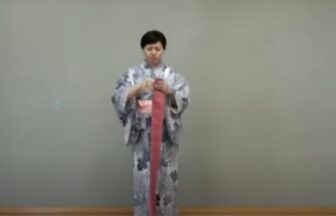
A type of kimono that covers the lower half of the body. It is similar to Western-style trousers, and is worn by putting both legs through the gusset, which is divided by a partition. From the Heian to the Muromachi period (1392-1573), it was used as a costume for court ladies (court ladies who served the imperial family or nobility), and in the Edo period (1603-1868), it became the formal dress of feudal lords and warriors. In the Meiji period (1868-1912), gakanai hakama (also known as gakanai hakama, a long skirt-like garment) were worn as school uniforms for girls, which were easier to wear. In the Meiji era (1868-1912), the gakanai hakama (also known as gakanai hakama, or long skirt-like hakama) came to be worn by girls as school uniform. Today, the gakayuri hakama is an essential part of formal wear for men. In recent years, an increasing number of female students are wearing gaketoshi hakama as formal attire for graduation ceremonies. Other traditional hakama are also used for kendo and kyudo wear, costumes for Noh and shimai dance, and for Shinto priests’ attire.