

Parks & GardensAzabu, Akasaka, Roppongi
Arisugawa-no-miya Memorial Park(Arisugawa-no-miya Memorial Park)
During the Edo period, the site was used as a subordinate residence of the Morioka domain’s Nanbu family, and in 1896, it became the official residence of the Arisugawa-no-miya family. After the abolition of the Arisugawa family, the Takamatsu family took over the family’s rituals.
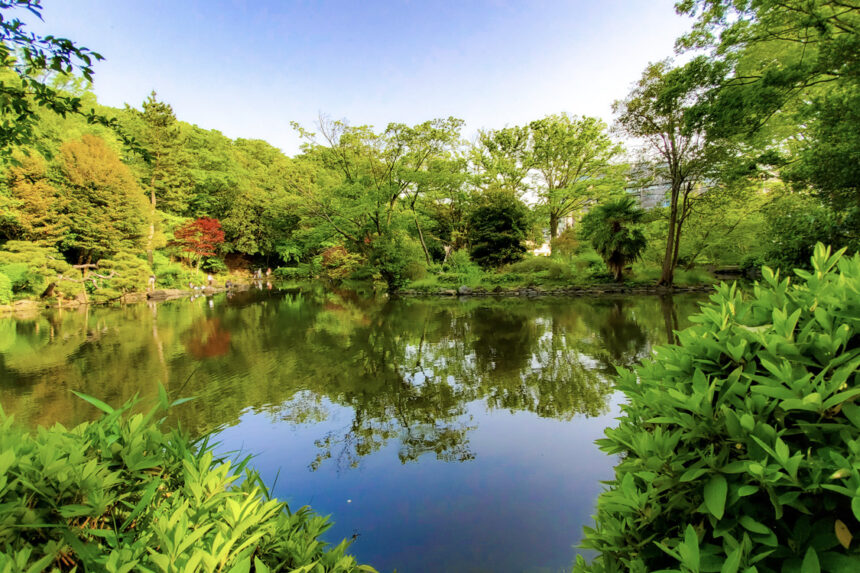
In 1934, the land was given to the city of Tokyo by Prince Takamatsu, who was interested in child welfare and nature, and opened to the public. The park has a Japanese garden that makes the most of nature with waterfalls and mountain streams, a plaza for children, and the Tokyo Metropolitan Central Library, making it a popular place for children and adults alike. A statue of Prince Arisugawa’s horseman, Prince Tetsuhito Arisugawa, is the symbol of the park. In addition to a plum grove and an iris garden, visitors can enjoy seasonal flowers such as 11 varieties of cherry blossoms, dogwoods, and hydrangeas.
Spot OutlineOutline
| address (e.g. of house) | 5-7-29 Azabu, Minato-ku, Tokyo |
|---|---|
| Access | 3 minutes from Hiroo Subway Station |
| phone | 03-3441-9642 |
| Business Hours | all day |
| regular closing day | without a holiday |
| External Links | |
| Founding and opening of business | 1934 (Showa 9) |