someone who is unable to apply what they have read

Japanese clothing

someone who is unable to apply what they have read(Ohashori)

Japanese clothesclothing

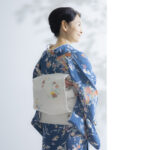
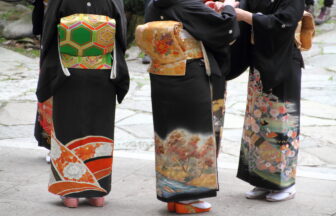
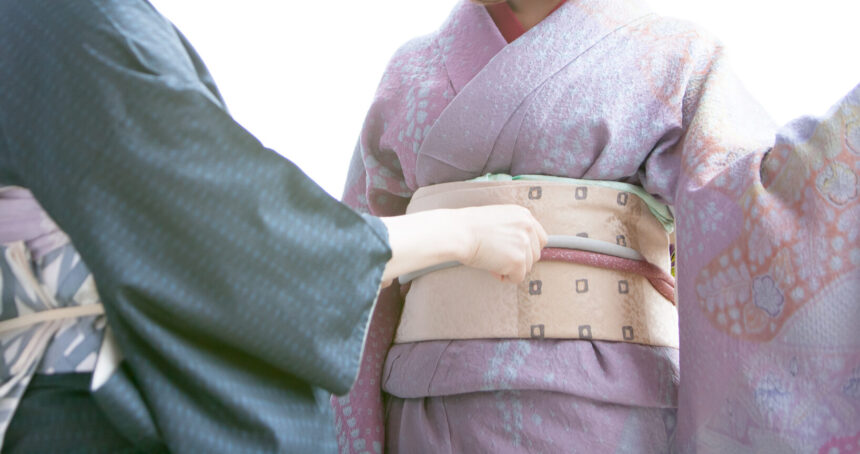
When wearing such a kimono, it is folded over at the waist to adjust the length, which is called “Ohataori. The folded part is also called “ohataori. The obi is fastened over the ohata-fold, and it is considered to be in good shape when it protrudes 6 to 7 cm (about the length of your finger) from the bottom of the obi. The length of the kimono can be adjusted when the height of the wearer grows or the hem of the kimono becomes damaged. Until the early Edo period, kimonos were tailored at the length of the kimono, but gradually the length of the kimono became longer, and when going out, kimonos were worn with the hem of the kimono lifted up by an obi sash, called “hem karaage. It was not until the middle of the Meiji period (1868-1912) that people began to wear kimonos with the omakage as we do today.

新着・おすすめ情報

  1. well-established

  2. Interview with Kotaro Ishikawa of Ishikawa Tortoiseshell Works, a company that connects traditional Edo tortoiseshell techniques and further promotes the Edo Tokyo brand .

  3. mixture of boiled beans, jelly cubes, fruit pieces and molasses

  4. Ueno, Yanaka, Nippori

  5. sweet burdock and miso-bean paste covered with a thin layer of mochi

  6. Namikaze Shrine (Tsukiji, Tokyo)

  7. very common way of tying a woman’s kimono sash

  8. Anyone can do it by themselves! Basic yukata dressing – women’s version

  9. Nihonbashi Saruya is the only toothpick specialty store in Japan. Once you use it, you will never go back to ordinary toothpicks.

  10. semi-formal kimono for women

  11. Kimono is an SDG costume. Unused clothes and tenugui (hand towels) can be used as obi sashes.

  12. Meishu no Taki Park (Oji, Tokyo)

  13. stalk (of a mushroom, leaf, etc.)

  14. Kabuto decorations for Dragon Boat Festival. Models of military commanders from the Warring States period are popular.

  15. Yanaka Cemetery