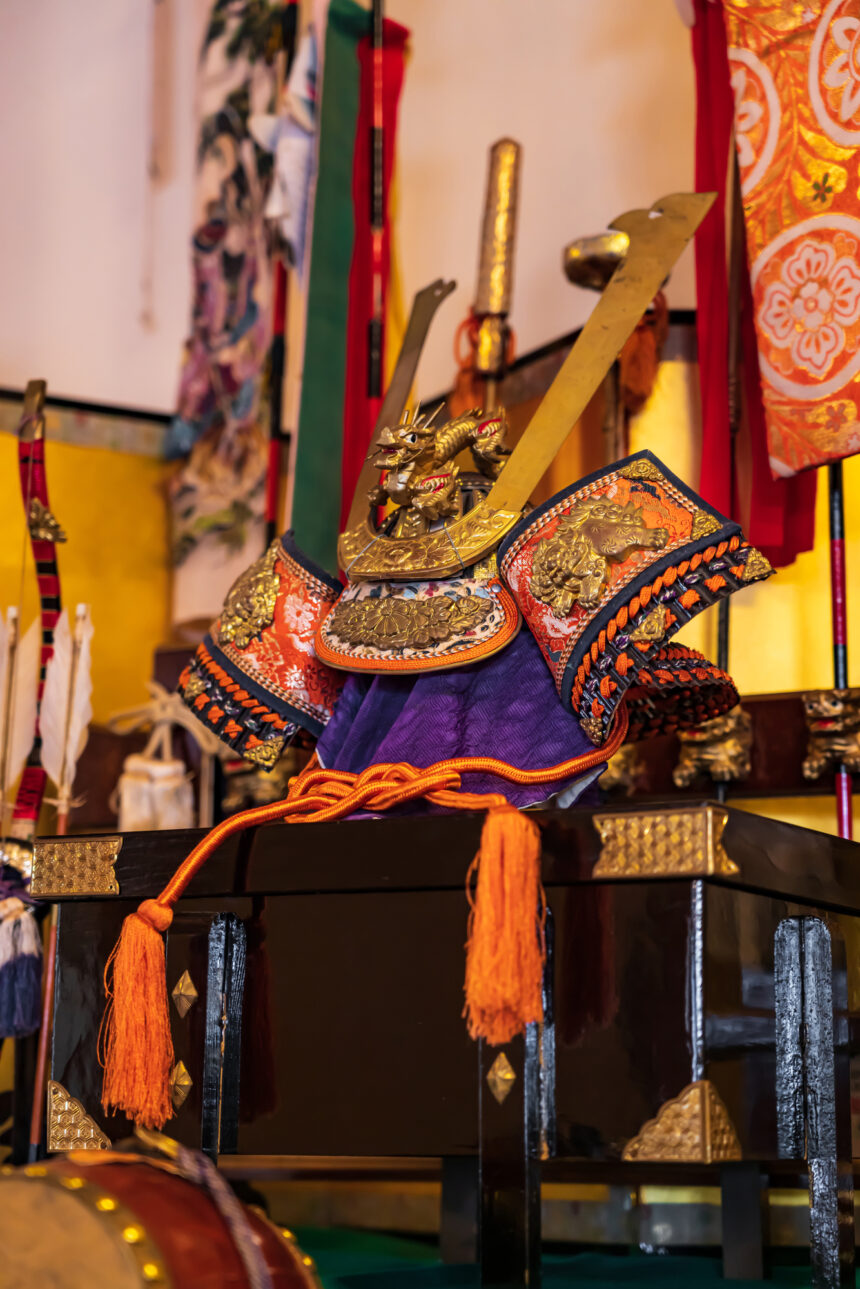
Kabuto decorations for Dragon Boat Festival. Models of military commanders from the Warring States period are popular.

puppet

Kabuto decorations for Dragon Boat Festival. Models of military commanders from the Warring States period are popular.(kabutokazari)

Children’s Day (national holiday; May 5th)Boy’s Day celebration (May 5th)

Kabuto is a simple display of just the helmet, and is popular as an indoor decoration for the Boys’ Festival. Kabuto is a protective head armor made of iron or leather, and is also a part of armor. Kabuto ornaments, which are miniatures of these armor pieces, are decorated with fine decorations such as through-carving and carved metalwork. Many helmets have distinctive characteristics depending on the period and the warlord, and in particular, the warlords of the Sengoku Period elaborated the design of their helmets. For this reason, in recent years, helmet ornaments based on the motifs of Sengoku-era warlords have become popular.
新着・おすすめ情報

  1. Inari-zushi

  2. 【第20回】家庭でも美味しく生麺の蕎麦を茹でる方法

  3. Developing original materials with attention to detail, starting from the fabric. Shukusen, a long-established yukata manufacturer loved by kabuki actors in the Edo period [Part 2

  4. The family motto is “Be a connoisseur. Gyokuho-Do” has continued to support the tea culture by handling tea utensils of the Unshu-Matsudaira and Omotesenke families.

  5. Otomeyama Park (Takadanobaba, Tokyo)

  6. What is “moromi”? Words related to sake

  7. Tokyo Literature Walk] No.5: Literary figures of the Showa period settled in Shimokitazawa one after another. Why Shimokitazawa became a town of culture

  8. Arisugawa-no-miya Memorial Park

  9. Kazari-uma” decorated on Children’s Day. What kind of vehicle is the white horse considered to be?

  10. ramen

  11. stem

  12. What are “Ichimatsu Dolls”? It was made to resemble a certain Kabuki actor in the Edo period.

  13. Sword eyelets become one-of-a-kind accessories. Nihon Katana, a long-established store specializing in swords that you can enjoy even if you are not an enthusiast.

  14. The characteristics of “koshu” (old sake) explained [Words related to sake].

  15. When did the Hina Matsuri (Peach Festival) begin?