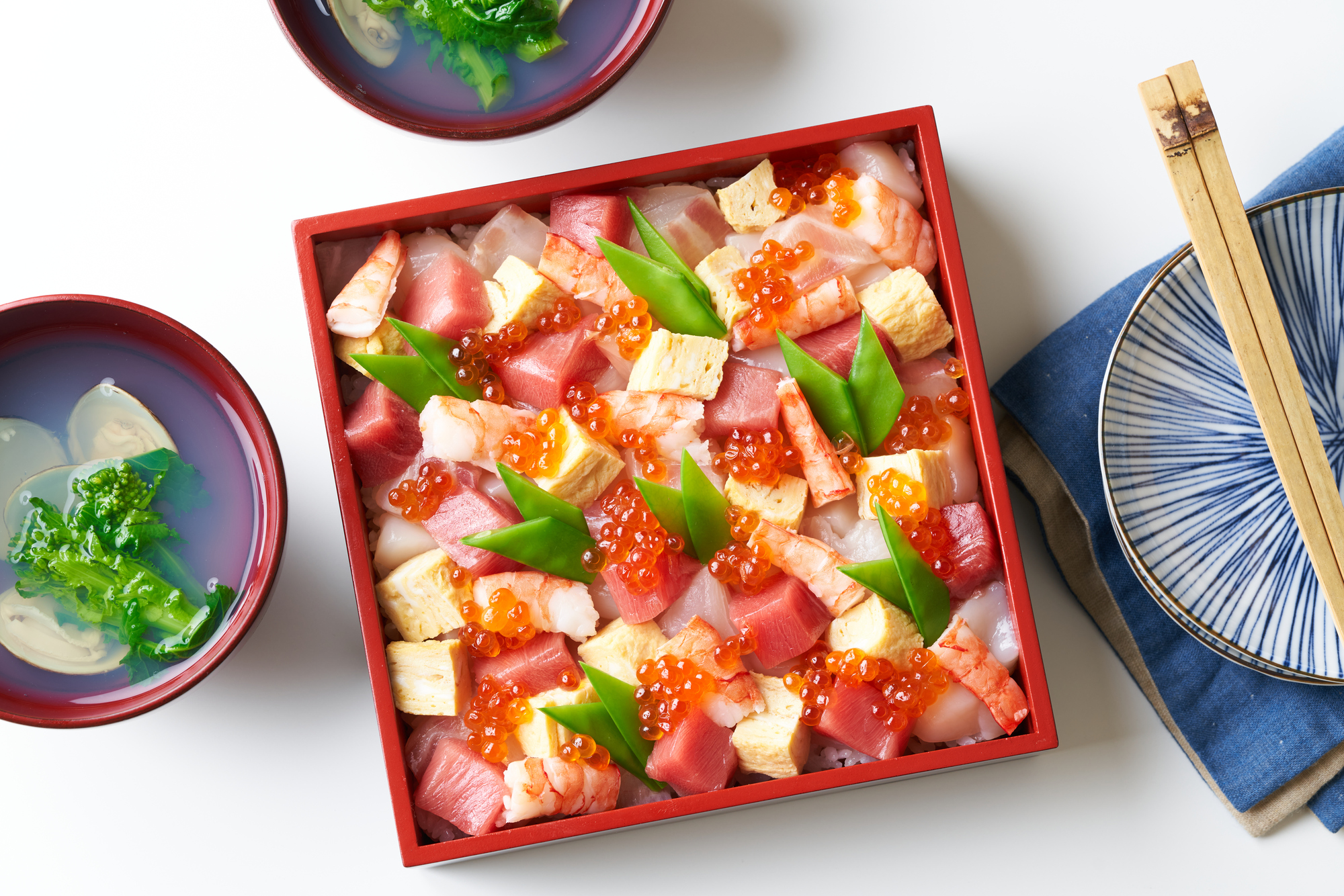
Explanation of the origin of Chirashi-zushi, ingredients used, etc.

sushi

Explanation of the origin of Chirashi-zushi, ingredients used, etc.(Chirashizushi)

festivaldollDolls’ Festivallocal cuisine

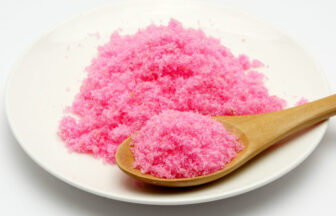
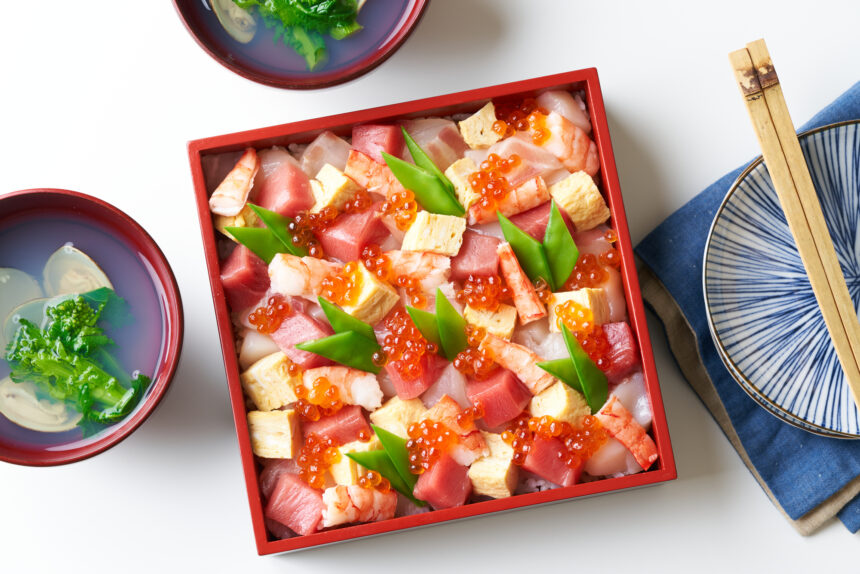
As the name implies, it is a dish of sushi rice placed in a bowl and “scattered” with ingredients, and is a popular dish for the Dolls’ Festival and celebrations. It is decorated with a variety of ingredients such as shrimp, sakuradenbu, egg, green vegetables such as peas and mitsuba, raw fish such as tuna, flatfish, and sea bream, vinegared horse mackerel, mackerel, saury, and yellowfin bream, lotus root, and shiitake mushrooms. In Kansai, it is common to mix some of the ingredients with sushi rice, as in gomoku-zushi. The predecessor of chirashi-zushi is said to be “hako zushi,” a type of pressed sushi in which a variety of ingredients are arranged on top of sushi rice packed in a wooden box. There are also local dishes such as “Okayama sushi” and “Iyo sushi,” which are prototypes of chirashi-zushi. There are various theories about the origin of chirashi-zushi. In the early Edo period (1603-1867), Ikeda Mitsumasa, the feudal lord of the Okayama domain, ordered “one soup and one vegetable” except for festivals in order to be frugal. However, the popular theory is that the common people, in protest, mixed fish and vegetables into the rice and changed the appearance of the dish to “one vegetable.” Today, June 27, the anniversary of Ikeda Mitsumasa’s death, is designated as “Chirashi-zushi Day.

新着・おすすめ情報

  1. Jindaiji Temple (Chofu, Tokyo)

  2. What kind of sake brewing method is “mizu-hashiroshi”? Words related to sake

  3. one-piece sash

  4. single pattern on the entirety of a garment

  5. just after fall

  6. Tokyo Station Marunouchi Station Building

  7. The company has 25,000 followers on social networking sites! Nihonbashi Benshitsu Sohonten, Japan’s oldest bento shop that delivers the taste of a long-established shop while using modern tools.

  8. Zenjoan (Yanaka, Tokyo)

  9. We don’t stick to tsukudani alone. They are also introducing Western flavors and expanding their sales channels. The Challenge of Shimbashi Tamakiya

  10. Zoshigaya Old Mission Building (Zoshigaya, Tokyo)

  11. Shiba Grand Shrine (the inner shrine of Ise Shrine)

  12. sweet red-bean soup

  13. 【第7回】蕎麦に欠かせない薬味「葱」と「唐辛子」について

  14. ridges on a blade (sword, knife, etc.)

  15. 【第23回】蕎麦屋店主が考える真の蕎麦「通」の定義