

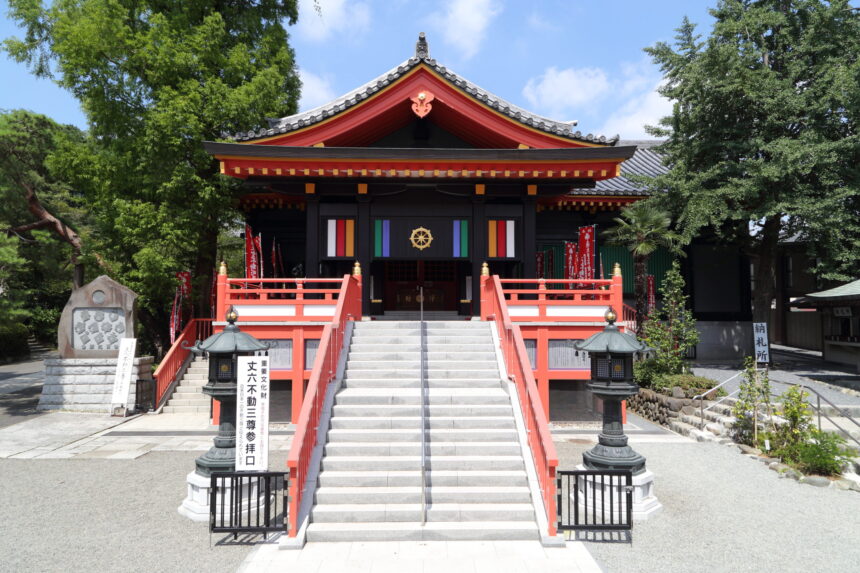
temple (Buddhist)Higashimurayama, Ome, Okutama
Takahata Fudo Kongoji Temple(Takahata Fudoson Temple)
Āryācalanāthaimportant cultural property
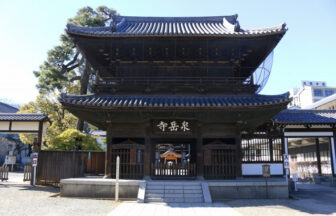
It is a separate head temple of the Chizan school of Shingon Buddhism, officially called Kohatazan Myoin Kongoji Temple. The main deity is Fudo Myoo. The date of establishment is unknown, but it is said to have been founded before the Taiho period (701-704) or by Gyoki in the Nara period (710-794). In the early Heian period (794-1185), Jikaku Daishi Ennin built Fudo Hall on Mt. Since then, it has flourished as a sacred site for Fudo Myoo. The current Fudo Hall was moved to the foot of the mountain and rebuilt in 1342 (Kouei era), and is designated as an important cultural property along with the Niomon Gate, which was built in the same year. The huge statue of Fudo Sanzon (late Heian period, Important Cultural Property), which was enshrined in the Fudo Hall, is now enshrined in the inner sanctuary. It is one of the three most famous fudo statues in the Kanto region, along with those of Naritasan in Chiba Prefecture and Daisen in Kanagawa Prefecture. (Image courtesy of Kongoji Temple, Takahata Fudo)
Spot OutlineOutline
| address (e.g. of house) | 733 Takahata, Hino-shi, Tokyo |
|---|---|
| Access | 5-minute walk from Takahatafudo Station on the Keio Line and Tama Urban Monorail. |
| phone | 042-591-0032 |
| Business Hours | 9:00-6:00, but Dainichido and Okuden are open from 9:00-16:00 (Dainichido admission fee: 200 yen, Okuden admission fee: 300 yen) |
| regular closing day | Open all year, but Dainichido and Okuden are closed on Mondays. |
| External Links | |
| Founding and opening of business | Pre-Taiho period (701-704) or Nara period |