Nihonbashi (bridge)sushi wrapped in fried tofuvinegared rice rolled in nori (laver)
Inari sushi is a “chic” food that can be quickly picked up and eaten with one hand. Founded in 1877, the famous Ningyocho Shinota Sushi General Store has been preserving the taste of inari sushi for many years. While keeping the taste loved by generations, the management policy has flexibly changed with the times. We interviewed the fifth-generation owner, Yoshimasu Yoshiyoshi, about the history of the restaurant and its future.
The “delivery service” had been introduced since the Meiji Era.
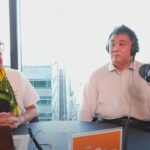
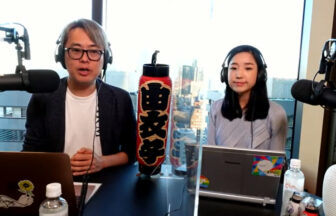
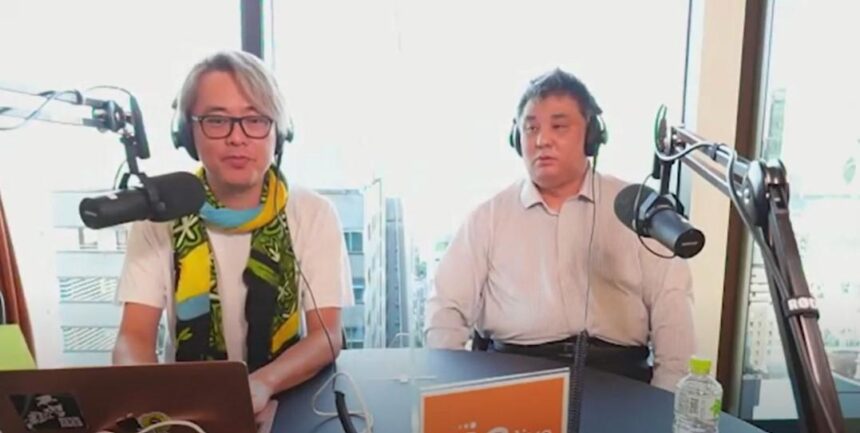
Today we have with us Mr. Yoshimasu Yoshiyoshi, the fifth generation owner of the Shinota Sushi Head Restaurant in Ningyocho. Could you please introduce Shinota Sushi?
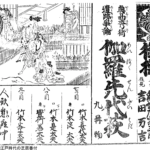
Shinota Sushi was founded in 1877. The company was founded in 1877, when the Meiji Restoration ended the samurai profession, and the founder, who was unemployed, began selling his favorite food, inari sushi, from a food cart. The name “Shinota” comes from “Shinoda Forest,” the setting of the Kabuki play “Kuzunoha Kojibareta” (The Farewell of Kuzunoha). A fox appears in the story, and the fox is associated with fried bean curd. The name “Shinoda” was chosen because of the association between fried bean curd and inari sushi.
There is a story that people who believe in Inari-san buy Inari-sushi from Shinota Sushi and offer it as an offering. It is a store with such a long history. May I ask about Mr. Yoshimasu’s personal history?
I myself am the fifth generation, but I originally had little desire to follow in the footsteps of a long-established company, and worked in the broadcasting industry until my late 20’s. I returned when I was 28 years old, and here I am today.
You took over the family business from a completely different industry! Do you have any family traditions at Shinota Sushi?
Nothing in particular (laughs). Whether or not I take over the family business, I feel that if I want to do it, I should do it, and if I don’t want to do it, I don’t have to do it. That’s what I’m going to tell my son.
Surprisingly, there are many long-established companies that have been around for a long time who tell such stories. I am sure there have been many innovations from the first generation to the present. Do you have any episodes?
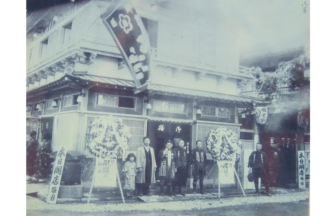
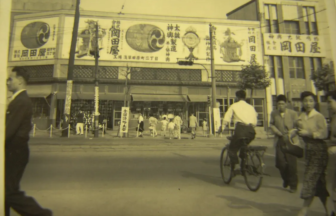
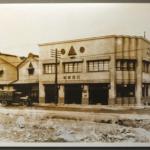
The first generation seems to have been very new-fangled. He adopted the telephone and bicycle as soon as they became popular, and started what we now call a delivery service in 1907 or so. This is also documented in photographs from that time.
You mean it was extremely cutting-edge! What was the product lineup like back then?
It started with Inari-san, and until before the war, it was just Inari-san and Kampyo-maki. It was not until after the war that there were more variations as there are now.
I see. I heard that inari was very popular at that time. What kind of people enjoyed it?
Although only the Meiji-za Theater remains today, Ningyocho was originally a town with many playhouses and yose theaters. I have heard that many people used to eat a little inari before going to the theater.
Let’s have a quick meal and go see a play! It’s like the spirit of the Edo people. It must have been very popular at the Meiji-za Theater at the time because it had a fast-food-like speed. When did you start making kanpyoumaki?
He was the third generation. He is the one who expanded the business tremendously during the period of rapid growth. I think there were more than 30 stores in the 1960s. Around that time, we also expanded our lineup of pressed sushi and chakinzushi. At one time, the first floor of the Ningyocho main store was an Edomae Sushi restaurant and the second floor was a Japanese restaurant.
Eh! You used to do Japanese cuisine as well? I did not know that. So it was the third generation who aimed to diversify the business. The third generation is Yoshimasu’s grandfather, right? Did you have many opportunities to talk with him?
We worked together for about six months, but I used to visit the store and listen to their stories when I was little. The third and fourth generations were like managers who never went into the field.
I see. You have been doing a lot of new things since you became the fifth generation, Yoshimasu-san.
After taking over the family business, he decided to start “business reorganization” first.
The first thing I did after returning to Shinota Sushi from another industry was to fold up a business that had expanded too much and was no longer fit for purpose. We had restaurants in Osaka, Hiroshima, and Nagano, and when I tried the food from each of these restaurants, it tasted different from what I was used to in Tokyo. I asked, “Why is this happening?” I asked him, “Because the taste of Tokyo’s vinegared rice doesn’t suit people in Kansai. So, I decided to close the local stores and keep them within my reach.
I think this is quite a wise decision, but it must have been hard to organize.
Reducing the number of stores would mean a reduction in the number of people, and for suppliers, it would mean a complete change in the volume of goods handled. But I kept my head down and maintained the stance that “I can’t do it. As a result, sales were reduced by about one-tenth, but profits did not change that much.
Wow, that is shocking! I often hear from long-established companies that “you can’t expand the business and the folding screen too much,” but even from your point of view, there were parts of the business that you thought were a little too expansive. I heard that you started downsizing your business immediately after you took office.
Over the next four to five years, we gradually downsized. It was two to three years after I returned that I became president.
We learned the surprising fact that the famous “Ningyocho Shinota Sushi Head Restaurant” had a history of liquidating its business. In order to protect the restaurant, which has continued to this day, what is the one thing that the owner of the restaurant “never changes”? We will find out in the second part.
⇒latter part(temporal or logical sense) follow …
*If you would like to see this dialogue on video.here (place close to the speaker or where the speaker is)