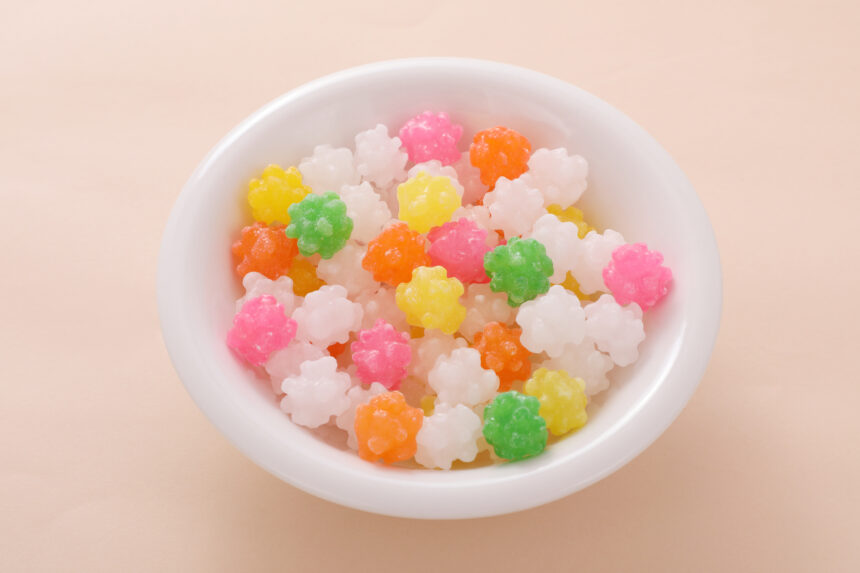
small coloured sugar candy covered in bulges

Japanese confectionery

small coloured sugar candy covered in bulges(konpeitou)

confections adopted from Portugal, Spain, etc. during the Muromachi period and since JapanizedOda Nobunaga

Nanban confectionery was introduced from Portugal during the Azuchi-Momoyama period. There is a record that it was presented to Oda Nobunaga by the Christian missionary Luis Frois. The name comes from the Portuguese word “confeito,” from which the Chinese characters for “kompeito” and “kinmai-sugar” were derived. When the kernel of a small candy grain is covered with molasses and heated while stirring, it gradually hardens to form horn-like protrusions on the surface. It is characterized by its lovely appearance, which is colored in various colors.

新着・おすすめ情報

  1. Tokyo Station Marunouchi Station Building

  2. Umezono, a long-established sweet shop in Asakusa. Brand is established through trust with customers and business partners.

  3. Denmacho Prison Residence Site (Jushikouen)

  4. Oji Shrine (Oji, Tokyo)

  5. sweet red-bean soup

  6. Kasai Shrine (Kanamachi, Tokyo)

  7. various

  8. A Walk in Edo with Old Maps] No.5: Traces of Edo Remain Strong in “Differences in Elevation” and “Town Names” in Ushigome and Ichigaya

  9. Hie Shrine (in Kyoto)

  10. Enmeiji Temple, Jizo (a jizo that cuts off the head) / Kozukabara Penitentiary Site (Minami-Senju, Tokyo)

  11. Suzuki Ruins Museum

  12. soba cup

  13. They also restore ancient musical instruments used in traditional performing arts. Okadaya Fuse’s Struggle to Preserve Traditional Japanese Culture

  14. The 2nd “Sake Samurai”s Tour of Tokyo’s Long-established Sake Breweries with Yuki Aoi

  15. Virudhaka (Buddhist deity)