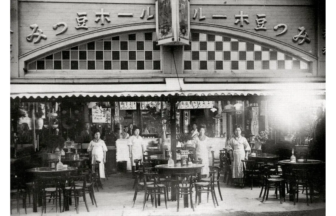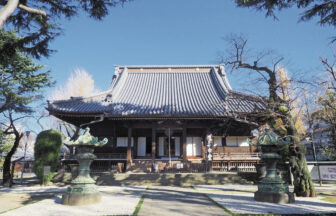


Sohonke Sarashina Horii is a buckwheat noodle restaurant that opened its doors in the first year of the Kansei Era with the sponsorship of a lord. While maintaining the commitment of a long-established restaurant, Sarashina Horii is also eagerly opening new restaurants overseas. We asked Yoshinori Horii, the ninth generation owner, about the secret of their signature soba sauce, which should be enjoyed at the temperature of red wine, and Sarashina soba, which was made pure white in order to be presented to the feudal lord.
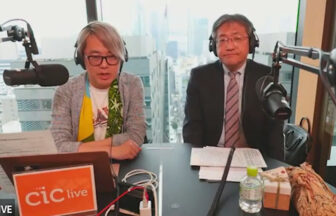
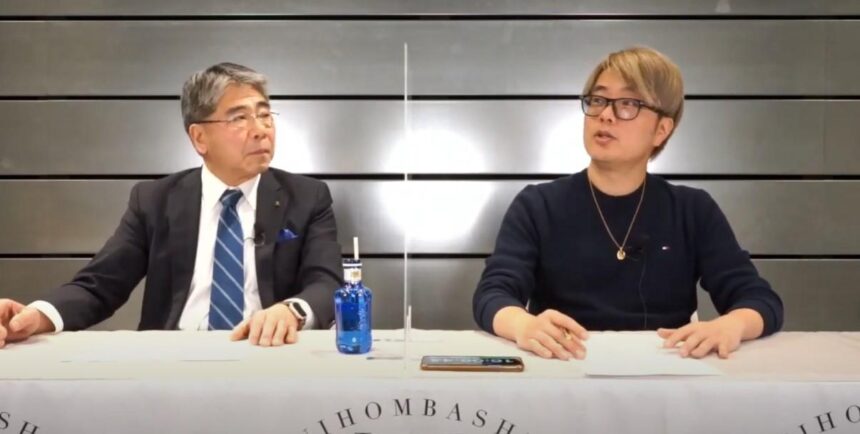
Hayashi: Could you first introduce yourself and your store?
Mr. Horii: My name is Horii of Sarashina Horii, which you introduced to us. We have stores in Azabu Juban and on the 6th floor of the new wing of the Nihombashi Takashimaya Department Store.
The company was founded in 1789,first year of the Kansei era (1789.1.25-1801.2.5)And I am the ninth generation. There are three types of soba restaurants in Edo: Sunaba, whose main branch is in Muromachi; Yabusoba, whose main branch is in Kanda; and Yabusoba, whose main branch is in Kanda. The first is Sunaba, whose head office is in Muromachi, and Yabusoba, whose head office is in Kanda. We have a Sarashina-style restaurant in Azabu, and we are the head family of this restaurant. Originally, my ancestors were cloth peddlers who traveled back and forth between Shinshu and Edo. When he was invited to stay at the residence of a lord in Shinshu, he said, “You are good at buckwheat noodle making, why don’t you come to Edo and open a buckwheat noodle shop? He was told, “You are good at buckwheat noodle making. He opened his store in the first year of Kansei Era (1789).
Hayashi: It is amazing that the lord is a sponsor.
Mr. Horii: That’s right. At that time, it seems that the network of feudal lords was also utilized. It is said that they even offered it to the Shogun’s family. But black buckwheat noodles have a lot of protein, and it sticks to them quickly. So, people naturally shifted to white buckwheat noodles. The sixth generation, my great-grandmother, worked with Ishimori Seifun to develop a new product, which sold like hotcakes and became a specialty. Sarashina-soba was sold for 1 yen, whereas heaping buckwheat noodles were priced at 15 sen at that time, so it was quite expensive.
Hayashi: (The fruits) are polished and polished and polished.
Yes, it is buckwheat noodles like Daiginjyo. Even when the water runs out, it can be loosened smoothly, and there is a record that it was even taken to Taiwan. I think they probably brought it to Taiwan in large quantities, such as 100 servings. My great-grandmother told me that our company was very prosperous at that time.
Hayashi: So it started with donated buckwheat noodles and spread to being taken overseas as souvenirs.
Ms. Horii:Monks who went begging for alms told me that the soba noodles there were delicious. My great-grandmother was very good at it, and she kept giving them to the begging monks. Then the reputation spread on its own. I guess it was my great-grandmother’s own advertising strategy.
Hayashi: Monks who give alms travel from place to place, so they play a role similar to that of influencers today.
Mr. Horii: That’s right. All over the country, people would say, ‘Their soba noodles are good,’ so that became another advertisement.
By removing the hulls and bran, pure white buckwheat noodles are produced.
Mr. Horii: Sarashina soba is pure white soba. How it is made is by eliminating all of the hulls and bran from the buckwheat seeds, and using only the pure white part of the buckwheat. People say that white buckwheat noodles may contain a lot of udon flour, but this is not true. Even if a high percentage of buckwheat flour is used, white buckwheat can be produced by removing the hulls and bran. However, they do not hold together well because there is no protein. Udon noodles also contain a protein called gluten, which is why they hold together as noodles.
Hayashi: Connected by the benefits of gluten, you said.
Mr. Horii: That’s right. Therefore, a special technique is required to make Sarashina-soba. Sarashina buckwheat flour is kneaded in boiling water of more than 90℃. Otherwise, it doesn’t become sticky. To make it sticky, the boiling water is so important that people say, “Put a kettle into the flour. This kneaded product is called “Soba-kaki” (buckwheat dough), and it works like a glue. Ordinary soba is kneaded while mixing in water little by little, but Sarashina soba is kneaded using this “soba-kaki” (buckwheat dough) to bring it all together.
Hayashi: It is a skillful technique.
Ms. Horii:It can also be arranged in various ways. For example, yuzu peels can be added to make yuzu kiri-giri, mugwort leaves can be added to make mugwort kiri-giri, and soba kiri-giri can be made with tomato juice to make a bright red soba called tomato-tsunagi.
Hayashi: Moreover, tomatoes have flavor, don’t they?
Mr. Horii: Yes, that’s right. I think it would be very interesting to serve it with basil sauce. Sarashina-soba is a pure white buckwheat noodle, so it has no peculiar aroma, and because it is a pure white campus, you can mix various ingredients to make a brightly colored buckwheat noodle.
Hayashi: You can enjoy both the aroma and color of the ingredients you mix in.
Currently offers 22 types of soba noodles! Loved by New Yorkers!
Mr. Horii:We have a store in New York, and 90% of New Yorkers eat Sarashina-soba. It is quite a pleasant feeling to imagine that New Yorkers are slurping the soba developed by the sixth generation.
Hayashi: That’s wonderful. In fact, I have eaten at Sarashina Horii many times already, and they really have a wide variety of food.
Mr. Horii:We have 22 types now.
Hayashi: 22 different kinds! That’s fun! I feel the potential of soba, or something like that. Besides that, you have been making various efforts recently, including mail order.
Mr. Horii:This is the era we live in. We make half-fresh soba noodles so that our customers can enjoy the same quality as in our restaurants at home. We also make frozen duck soba on a separate line.
How did Sarashina soba become pure white? In the second part, we will learn how to boil and eat Sarashina-soba. In the second part, we will ask the ninth generation to teach us how to boil and eat soba in a delicious way.
⇒latter part(temporal or logical sense) follow …
*If you would like to see this dialogue on video.here (place close to the speaker or where the speaker is)