They also restore ancient musical instruments used in traditional performing arts. Okadaya Fuse’s Struggle to Preserve Traditional Japanese Culture

Asakusa (department store)Buddhist altar equipmentBuddhist (household) altardrum

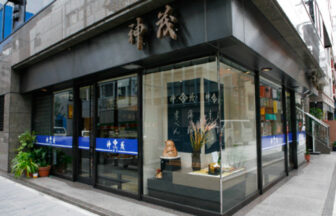
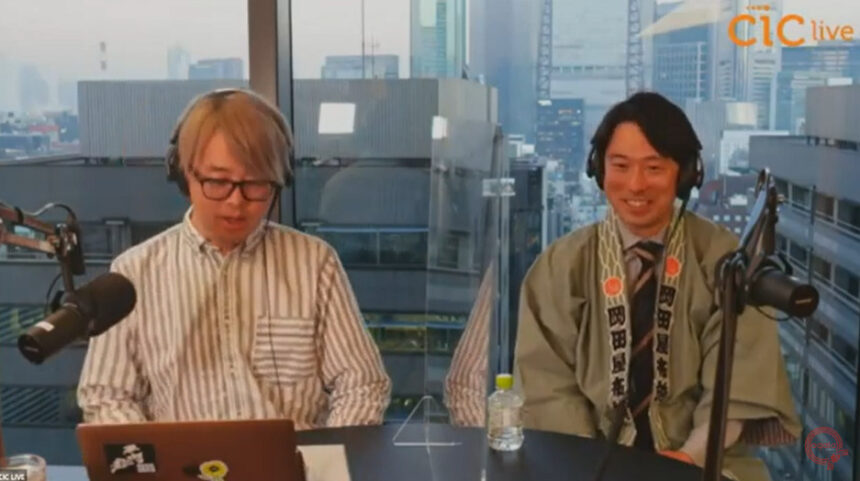
Okadaya Fuse has a store along Kokusai-dori Avenue in Asakusa with an array of taiko drums in its storefront. Founded in 1835, the shop has a 188-year history. It began as a tool shop. The company eventually began selling Noh drums and drums, and now also handles festival drums, Kabuki narimono, Buddhist altars, and Buddhist altar and altar accessories. We interview Yoshihiro Fuse, the seventh generation head of Okadaya Fuse.

first partArticle by ~.

I understand that traditional instruments can be made to order, but do people who make custom-made instruments ask for a certain tone, a certain type of skin, or a certain amount of tension?

Yes, we do. Most of the orders are like that. Sometimes we receive special orders for this kind of sound, and sometimes we have the customer choose from a selection of torsos.

Is there anything that you have ever said, “This was a very elaborate drumming project,” or “This was a wonderful and interesting order.

There are traditional performing arts in Japan that have been lost, and sometimes there is work to restore the instruments that were used in them. For example, there is a lion dance called “Kakubei Jishi” in Niigata City, where children perform Karuwaza, a kind of circus-like lion dance at New Year’s and other events. There used to be such an event in the past. The lion danced at that time was Kakubei Shishi. I was involved in the restoration of the drums that were used during that time.

However, since the drums were particularly old and ancient, the act of disassembling them was quite difficult. I had to guess at the appearance of the drum, the material of the strings that were attached to it, and the condition of the drum when it was brand new. But there were some things that were sewn on that were not in use today. It was a shimedaiko, but it was tightened in a way that is not done today. We get those materials and restore them.

As for my recent work, I restored an azazayumi, a bow used for séance ceremonies by Itako-san at Mount Osorezan. The Azazayumi is said to be very old. I had the very interesting task of restoring an instrument that had already disappeared.

It is still good while samples are still available, though.

You did it by guessing from what is left in the materials and documents.

Now, please take the next picture.

Here is a view of the workshop where the drums are being stretched.

It is a very big drum.

Yes, it is. It is a very large drum. Usually, drums this big are not put up, so I have left them here for you to see. This is a large taiko drum used at the Okunitama Shrine in Fuchu City. It is beaten during festivals.

What are they doing in the next picture?

This is also a way of stretching the drum. A rope is attached to the skin with a string, and the skin is pulled from there and stretched. You can see the process of stretching the skin in the photos. Next, thick mousou bamboo is stretched over the rope.

You build up the tension.

That’s right. Then we twist it. The process has been the same for a long time, so we have not changed this way of making them.

What is innovation in taiko production?

After all, there is one great value in continuing to do this old-fashioned thing even today.

There is some innovation as well. You can see a little red area at the bottom, originally we would have driven a triangular wedge in there to lift the drum itself, but now we are using a jack-up.

I see. We will use what we can use in those areas.

Yes, it is. You should use it. In the old days, we used to insert a triangular piece of wood into the gap between the boards, hammer it in with a wooden hammer, and then lift it up. But it was inefficient and could not be tightened that tightly, so we used jack-ups.

This is reasonable. This is a great innovation.

There are too many minor innovations that I am not aware of.

What are you working on next?

This is done by driving a wooden hammer into the area to extend the skin from the tightened cord. This is how the skin is stretched. This is the process of making the product.

Yes. And that’s the next picture.

When the sound of the taiko is determined, tacks are made.

This makes the drums look somewhat familiar.

Yes, this is what it looks like when tacks are shot into it.

And now that the tacks have been shot, what’s this next picture?

Sorry, this is back and forth in order, but this is a person on top of the drum before the tacking.

I see.

Yes, I am. The two people on top of this, weighing more than 80 kilograms, actually almost 90 kilograms, go over the skin, stretch it tightly, and then stretch it further again, repeating the process several times before finally tackling the skin.

That’s what I mean. Everyone is not playing around (laughs). (Laughs) It’s the same with swords: cool, heat, and strike. I guess it is the same way.

Yes, it is leather, and without this work, it would easily loosen and not sound true.

By doing it this way, we can create a better product.

This is a picture of a portable shrine. This mikoshi is the Sanja-gata, which is the form of the mikoshi carried only at the Sanja Festival. What is different is that the arm-like part that wraps around from under the roof is called “Warabide,” and it comes out from the bottom.

This is a characteristic of the sansha type.

Yes, it is. This is a portable shrine that we made.

Thank you very much. So far, we have heard what Okadaya Fuse-san values, but how did you yourself grow up?

I had a great grandfather, a very scary man. I learned everything from him. I started my career as a craftsman. I started with an apprenticeship in taiko making. My grandfather is a craftsman, so I learned the work of making from him.

Has that been the case since you were a child?

Well, I wasn’t told to “take over the business” that much when I was little, so I grew up with a somewhat vague feeling of that. However, I had an older sister, and I think she wanted to take over the business, too. I felt a little sorry for her.

I see. When you were a student, you somehow thought you would take over the business, and you joined Okadaya Fuse as soon as you entered the workforce.

I took the university entrance examination, but failed the first time, and when I was deciding whether or not to become a ronin, I asked myself a few questions, and my answer was that I hated studying. I also had an evil thought that if I worked, I would earn money. That was really the simple reason why I started working. That was right after I graduated from high school. That is when I started my training as a craftsman.

Finally, what is your outlook for the future?

I am thinking that we need to be able to do various things remotely in the midst of the Corona disaster. However, I think it is difficult to do so, and I am considering this as an issue to be addressed.

Okadaya Fuse” is also involved in the restoration of traditional instruments that have been lost. The work based on limited materials must be quite a challenge. However, Okadaya Fuse will never give up in order to preserve the Japanese tradition. Okadaya Fuse will continue to preserve traditional instruments.

*If you would like to see this dialogue on video.here (place close to the speaker or where the speaker is)

新着・おすすめ情報

  1. man’s formal divided skirt

  2. 【豊島屋本店】本年の白酒が出来上がりました

  3. What is the alcohol content of sake “Harazake”? Words related to sake

  4. dagger

  5. 12 recommendations for long-established products to give as Mother’s Day gifts.

  6. Umezono, a long-established sweet shop in Asakusa: From awa-zenzai to dora-soft (soft rice cake), “80% on the defensive, 20% on the offensive” wins the hearts of young people.

  7. Denmacho Prison Residence Site (Jushikouen)

  8. Unosuke Miyamoto Shoten] “Hibikasu” Japanese drum school: Zero admission fee campaign until the end of June.

  9. Shiobune Kannonji Temple (Ome, Tokyo)

  10. Unosuke Miyamoto Shoten] May 27th! Registration for the workshop by Katsuji Kondo, taiko drummer, is now open!

  11. Mamegen (Buy / Azabu, Akasaka, Roppongi area) page is now open

  12. 【老舗ご当主・識者と歩く】日本推しラトビア人アルトゥルさんと虎ノ門−新橋の老舗をめぐる

  13. 【ホテル龍名館東京】年末年始限定の宿泊プラン ご予約受付中

  14. 【日本橋弁松総本店】「春ちらし」期間限定販売中

  15. Sekiguchi Bashoan (Waseda, Tokyo)