To make swords a part of our daily lives. The future of swords is the goal of Nihon Katana, a long-established sword specialty store.

turftraditional craftJapanese swordarmor and helmet (armour)

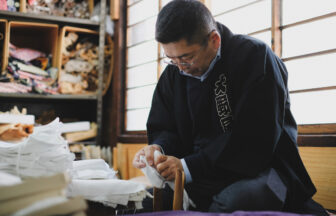
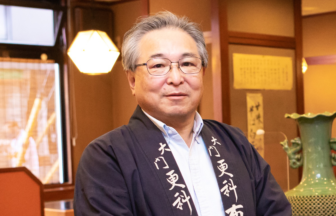
Japanese swords have many enthusiasts overseas. For beginners, it may be a difficult world to enter, but if you take a closer look at each piece of sword equipment, you will realize its high value as a work of art. The Japanese Sword Museum, located in Toranomon, is engaged in a variety of efforts to make such swords more attractive to a wider audience. For this interview, we sat down with Kenichi Saito, a cultural entrepreneur, to talk with Kenichi Iha, the fourth generation owner of Nihon Sword.

first partArticle by ~.

It is a traditional craft when you see the detailed and beautiful workmanship.

That’s right. All the workmanship has a meaning. It may be in accordance with Chinese folklore, or beautifully decorated with flowers, or depicting one’s zodiac sign.

What is the pattern for this?

This is a chrysanthemum pattern. I think this combination was chosen because, although they were brave, they also had the spirit of enjoying flowers. It seems that some samurai of the past changed their tsubas depending on the season.

It’s stylish.

The most conspicuous place in the middle of the pattern is the menuki. Menuki are always paired on the front and back, but some are left as a single piece due to a broken thread. We wanted to make use of them somehow, so we processed them into one-of-a-kind accessories and cufflinks. We hope that people will enjoy them in various ways according to the times.

I have heard that Japanese swords were also used as ornaments in the past, but did they still enjoy the decoration itself?

The same is true of the tsubasa I mentioned earlier. What could have been simply a board was made more gorgeous by going to the trouble of adding decorations. In the Edo period, there were basically no major battles, so I think the samurai enjoyed being fashionable in that area. Not only Samurai, but also merchants who became wealthier and richer were able to have their own original swords made, since they could not hold swords but could hold Wakizashi.

I think it is great that they are with the sword in various forms, including well concealed.

I often have visitors to my store ask, “Is this something you cut?” I am often asked. When you watch battle scenes in TV dramas, you see people messing around with swords, but if you do that, the blades get torn up, so the swords on display in the store now are basically swords that were never used in battle. A sword with such a clean and well-shaped blade is called “sound.

So the swords you have now are unused swords.

Swords were not so much used for warfare as they were given by lords as a token of friendship or as a reward for doing something good.

You mean swords as works of art.

The sharpening is also very beautiful and produces beautiful ripples, which I think is one of the artistic features of this area.

There are many entry-level users who are somewhat fascinated by swords but do not know where to start.

Some people think they cannot have one because of the Firearms Law, but the Board of Education under the jurisdiction of the Agency for Cultural Affairs issues a registration certificate, so basically anyone with an address can purchase one. I think that if you first get one that you can easily afford in this way, you will enjoy touching it. Or, you could just get one good one and enjoy licking it. As you look at various things, you will gradually come to know what you like, so why not pick up something you like and own it?

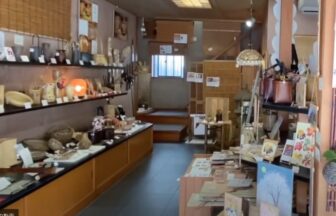
First of all, I would like to ask you to visit Japanese Sword in Toranomon. As you can see when you visit the store, there is a lot of armor, etc., and it is just amazing.

On the second floor, there are various art works related to samurai, such as armor, jinhaori, bows, and cases for arrows, which can be viewed without glass cases. Of course it is nice to see daimyo swords in a museum, but I think it is quite enjoyable to see them without glass cases because you can see the raw moisture.

What are the innovation challenges we face today?

The tachi swords worn by His Majesty’s entourage and used by military commanders in ceremonies have many small metal fittings. Although there are many people today who want to become sword smiths or sword sharpeners, the number of people who can make such small metal fittings and wooden sheaths is decreasing. We are now concerned about how far we can go with the current technology.

It is an innovation challenge that has been imposed on us.

Yes, it is. It’s a difficult place to be, because you won’t be able to live a wealthy life if you enter this path. It will be a modest task, but I would be happy if more people would make it.

If we were to make sheaths and metal fittings that could only be used for swords, the scene would be very limited. Moreover, the scabbard has to be made to match the blade.

Each piece is different from the next. There is a saying that “they are not in sync with each other.

I see. So that is where the idiom comes in.

Incidentally, it is said that “mezuridori” also comes from the sword’s menuki. It is said that it came to be so called because it is located at the most central and prominent part of the handle.

There are so many stories that come from swords. There are a lot of exciting things to see when you go to Japanese Sword Shop. Could you tell us about what you would like to do in the future at Japanese Sword?

Japanese swords are attracting a great deal of attention from overseas. Recently, the number of sword fans has been increasing a lot in Japan. The entrance can be anime or anything else, but I think we have to convey the knowledge and manners correctly.

Do you have any specific examples of what you are working on?

I think it is important to welcome a wide range of customers at exhibitions and other opportunities, give them proper explanations, and let them take a good look at the products.

If you ask Mr. Japanese Sword, he will tell you those things.

What we can do for contemporary swordsmiths

And even today, there are about 60 to 70 people who make a living as swordsmiths. We would like to continue to introduce these contemporary artists in our department stores. Even if it is hard in terms of profit, I believe it is important to keep the culture of swords alive.

It is a tough business, but if these people do not continue to participate, the culture of swords itself will disappear. This is a difficult balance to strike.

As with the Megane accessories I mentioned earlier, I would like to lower the bar a little so that people can enjoy them in a more familiar way.

It would be good if there are more opportunities to come into contact with various things. If more and more people wear accessories with some meaning or have them in their daily lives, as in the case of eye-piercing accessories, I think we can place a lot of seeds of interest in them.

Finally, I would like to ask you all for a few words.

It is said that more than 70% of injuries in olden times were caused by bows and arrows and spears in battles, and swords are actually not used much in battle. Many people shy away from Japanese swords because of the fact that they are weapons, but in that sense, I would like people to look at them a little more casually. I think you will see how beautiful they are when you look at them up close.

When you hear the word “sword,” you may inevitably have a strong image of swords as something that has been used in warfare. However, since that time, they have also been meant as ornaments and were part of the fashionable look of the samurai. Japanese swordsmiths are making efforts to capitalize on this and promote swords as modern works of art.

*If you would like to see this dialogue on video.here (place close to the speaker or where the speaker is)

新着・おすすめ情報

  1. Toranomon Okano Eizen

  2. What is the alcohol content of sake “Harazake”? Words related to sake

  3. 【第15回】江戸蕎麦の流儀〜蕎麦の茹で方編〜

  4. Zenjoan (Yanaka, Tokyo)

  5. Metropolitan Takiyama Park, Ruins of Takiyama Castle

  6. Manners for Year-End Gifts for 2023: 3 recommended products and notes on when and how to give them.

  7. Mukozuke” is served at the beginning of kaiseki cuisine. What is the origin of its name?

  8. Kanda Yabusoba’s “Kamo Nanban” is in season now.

  9. How do you read “shicho”? What do the different expressions mean? Hina Dolls

  10. Ichigaya Kameoka Hachiman Shrine (Ichigaya, Tokyo)

  11. steamed fish-paste cake, sliced to decorate soup (type of kamaboko)

  12. revitalization

  13. 【イベント開催】豊かな自然と伝統のまち与謝野町で非日常の体験

  14. Kanda Miharado

  15. What is Dragon Boat Festival?