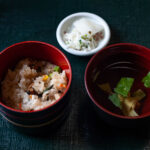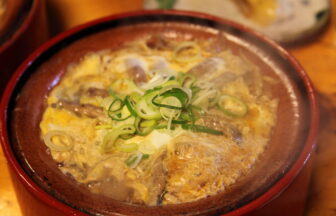
duck meat stew (dish from Ishikawa prefecture)

Japanese-style meal

duck meat stew (dish from Ishikawa prefecture)(jibuni)

local cuisine

A local dish of Kanazawa City, Ishikawa Prefecture. It is a dish of simmered duck or chicken, Kaga’s specialty sudare-fu, seasonal vegetables, and other ingredients. It has been handed down from the Edo period to the present day. The characteristic feature of this dish is that the meat is covered with flour and simmered, thus thickening it. There are various theories as to the origin of the name, including that Christian feudal lord Takayama Ukon learned it from missionaries and introduced it to the Kaga domain, that Okabe Jibuemon, a military ration officer under Toyotomi Hideyoshi, introduced it from Korea, and that it was introduced by a Russian who drifted ashore. Another theory is that it was named after the fact that it is boiled in a pot, jibu-jibu.

新着・おすすめ情報

  1. How to read “strong snacks”? Kaiseki and Kaiseki Cuisine

  2. small coloured sugar candy covered in bulges

  3. underskirt (half-slip), worn under kimono

  4. Zuijin” is a male doll that serves as an escort for O’naira-sama [Hina Dolls].

  5. Gosho Ningyo” was a gift to the Imperial Palace. Also known as “Hai Hai” and “White Meat Dolls.

  6. mochi containing red bean paste

  7. 日本橋

  8. What is included in “chopstick washing” in kaiseki cuisine? In what order are they served?

  9. 【第1回】蕎麦の実の殻を完全に取り除いて作る「江戸蕎麦」

  10. Daiba Park (Odaiba, Tokyo)

  11. Ryugenji Temple (Kameido, Tokyo)

  12. Selecting the best materials for each application and finishing them with craftsmanship: the pride of the long-established “Edoya”, which has been in business for 300 years, in the creation of brushes and bristle brushes.

  13. silk gauze

  14. Tsukiji Honganji Temple

  15. ratio indicating the quantity of polished rice gained from a given quantity of brown rice (nowadays usually expressed as a percent)