

Eel, eel, conger eel, and doze eel
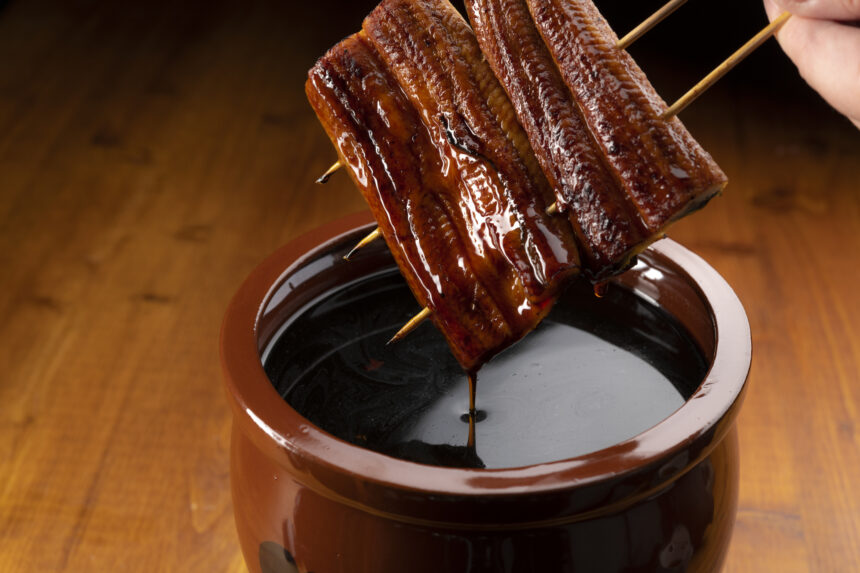
broiled eel(Eel kabayaki/unaginokabayaki)
loach or eel dipped and broiled in soy-based sauce
Eels are opened, gutted and deboned, and then grilled with a sweet and spicy sauce made of soy sauce and mirin (sweet cooking rice wine). The Kanto style involves a steaming process after opening the eel, while the Kansai style is characterized by grilling without steaming. It is said that in ancient times, eels were grilled on bamboo skewers without being opened, and the name “kabayaki” was derived from its resemblance to the ears of the perennial plant “kama” (kama). Another theory is that the name “kabayaki” was derived from the color of the grilled eel, which is birch-colored. The current style of broiling eels in an open pan is said to have started around the end of the Muromachi period (1336-1573), and by the late Edo period (1603-1867), it had spread among the townspeople, and many stores selling broiled eels lined the streets of Edo (present-day Tokyo).