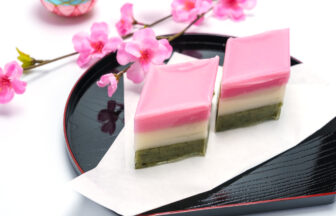
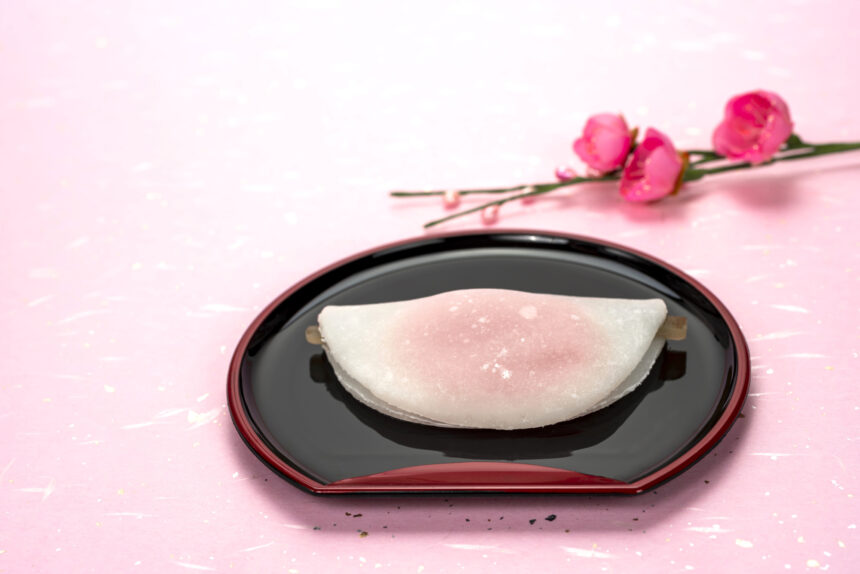
sweet burdock and miso-bean paste covered with a thin layer of mochi

Japanese confectionery

sweet burdock and miso-bean paste covered with a thin layer of mochi(Hanabiramochi)

red bean pastemochi (glutinous rice or other grain, sticky enough to make mochi rice cakes)New Year

A semi-circular mochi cake eaten during the New Year’s holiday. It is made by wrapping a rounded piece of white gyuhi inside a thin, diamond-shaped pink mochi, white miso bean paste, and sweetened burdock root. It is also called hishihanabira mochi. The origin of the name “hishi-hanabiru-mochi” comes from a Heian-period court ceremony called “teething hardening”. In the New Year, there was a custom of eating a sweetfish (salted sweetfish used for New Year’s celebrations) and miso wrapped in rice cake “Zoni” at court to wish for longevity, which later became sweets and eaten at court. The burdock is a substitute for pressed sweetfish, and the diamond shape is a remnant of the shape of New Year’s rice cake. In the Meiji period (1868-1912), Urasenke began to serve it as a confectionery for the first tea ceremony, and it is said to have spread to wagashi shops nationwide.

新着・おすすめ情報

  1. What is the temperature of “hot sake?” Explaining the Temperature of Heated Sake [Words Related to Sake].

  2. man’s stiff sash

  3. To make Japanese “tea culture” widely known. Flexibility of “Gyokuho-Do” to change with the times.

  4. Kanto style and Kansai style (broiled eel)

  5. Tokyo Resurrection Cathedral (Nikolaidō Hall)

  6. Ginza Matsuzaki Senmochi, a long-established shop, depicts tradition and innovation with its signature product “kawara senbei” (tile rice cracker).

  7. The name “Mokumegome doll” comes from the fact that the fabric is pressed into the shape of a doll.

  8. Developing original materials with attention to detail, starting from the fabric. Shukusen, a long-established manufacturer of yukata loved by kabuki actors in the Edo period [Part 1

  9. Kansai-style sushi (esp. pressed sushi, such as battera)

  10. Akatsuka Fudo Falls (Takashimadaira, Tokyo)

  11. Shokado bento” is a shortened form of “kaiseki” cuisine. Kaiseki” or “Kaiseki”?

  12. (silk) crepe

  13. Japanese doll” is a generic term for dolls traditionally made in Japan. What types are there?

  14. Seppuku monaka” and “Keikyuu monaka” …… “Shinshodou” produces wagashi that are both humorous and delicious.

  15. lined kimono