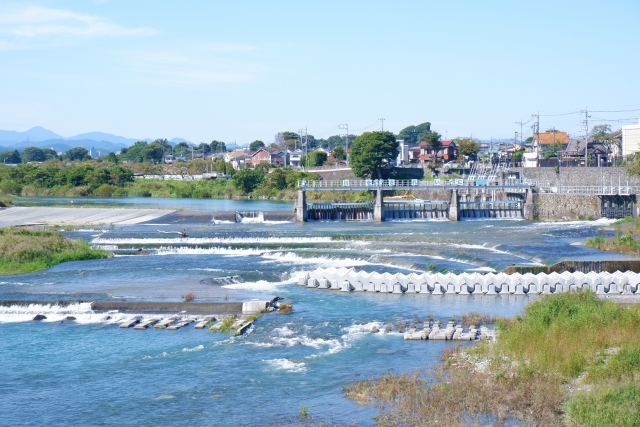
Hamura Intake Weir

historic siteHigashimurayama, Ome, Okutama

Hamura Intake Weir(Hamura Weir)

river running between Tokyo-to and Kanagawa Prefecturesluice gatewater trickling from the Tamagawa River

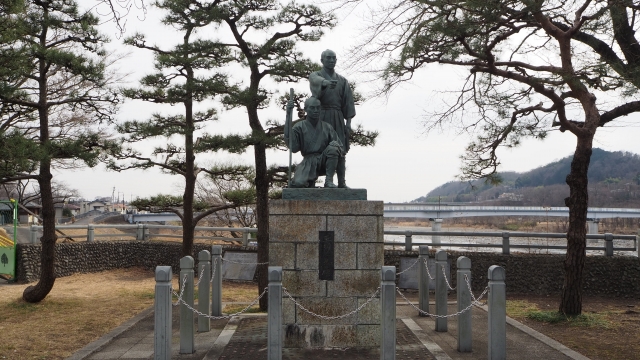
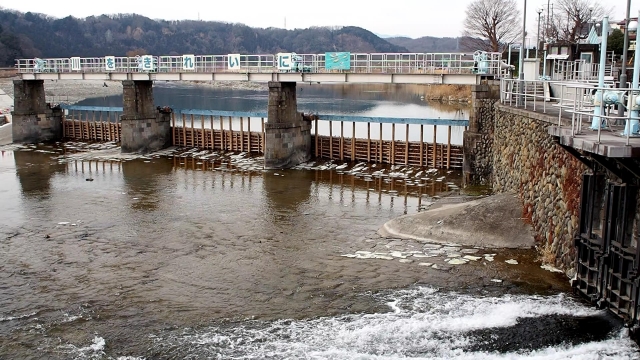
It is an intake weir for the Tama River that was constructed at the same time as the Tamagawa Josui, and was completed in 1653. It consists of a tidal weir that holds back the river, a fixed weir, a fish passage for fish to come and go, and the first sluice gate that takes in the water that has been held back. When the water level of the Tama River rises above a certain level due to heavy rains such as typhoons, the weir is removed and the weir itself is flushed downstream, and when the water level drops, the weir is rebuilt. When the water level drops, the weir is reconstructed. Raw water taken from the reservoirs is led to the Murayama-Yamaguchi Reservoir and the Ozaku Water Filtration Plant, as well as to the Higashimurayama Water Filtration Plant via the Tamagawa Josui Channel. Nearby stands a statue of the Tamagawa brothers, who made great contributions to the construction of Tamagawa Josui.

Spot OutlineOutline

address (e.g. of house) 3-8-32, Hadou, Hamura-shi, Tokyo
Access 10-minute walk from Hamura Station on the JR Ome Line.

Business Hours always open
External Links

Official Web Site

Founding and opening of business 1653 (Shouou 2)

新着・おすすめ情報

  1. Inheriting the craftsmanship of making each toothpick one by one. Commitment to “Nihonbashi Saruya,” the only toothpick specialty store in Japan

  2. What kind of sake brewing method is “mizu-hashiroshi”? Words related to sake

  3. sweet yuzu-flavoured steamed dumpling

  4. Former Kusuo Yasuda Residence Garden (Sendagi, Tokyo)

  5. Kiyosubashi Bridge (Kiyosumi-Shirakawa, Tokyo)

  6. What is the origin of “May dolls” displayed on Dragon Boat Festival?

  7. Before the Edo period, “Dedication confectionery” was a top-quality confectionery made with white sugar.

  8. A Walk in Edo with Old Maps] No.5: Traces of Edo Remain Strong in “Differences in Elevation” and “Town Names” in Ushigome and Ichigaya

  9. Tsukiji Honganji Temple

  10. Enoki mushroom (Hypsipetes amaurotis)

  11. sweet red-bean soup

  12. Daiba Park (Odaiba, Tokyo)

  13. Musashi Fuchu Kumano Shrine Tomb (Fuchu, Tokyo)

  14. Tama Cemetery (Fuchu, Tokyo)

  15. Definitions of “Daiginjo-shu” and “Junmai Daiginjo-shu” [Words Related to Sake].