

Nihonbashi (bridge)katsuobushi
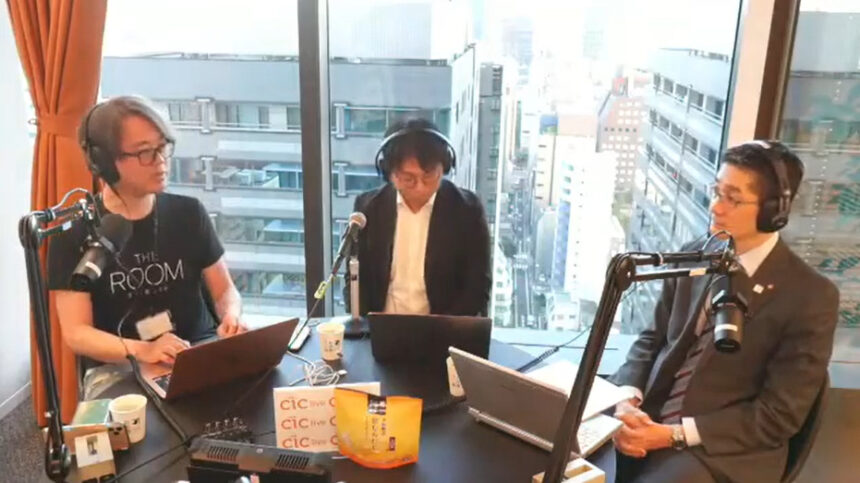
Ihee Takatsu, the 13th generation owner of Nimben, says, “Even though we are a dried bonito flakes shop, our management style is that of a financier. What is the pride of this long-established company that has sustained Niben for 321 years, a company so pervasive in the lives of ordinary people that it is now the first name that comes to mind when one thinks of dried bonito flakes? Together with cultural entrepreneur Kenichi Saito, we will hear about their beliefs in management that are still applicable today, such as their ability to acquire large customers, cash flow management, and astute reading of market needs, which can be gleaned from this experience.
First of all, may I ask the owner to introduce himself and his store?
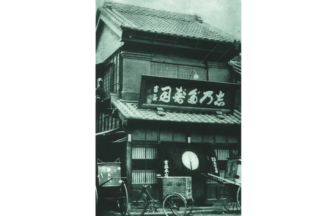
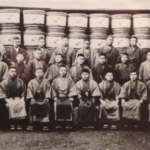
My name is Ihee Takatsu. I was under a different name until just this past February, when I assumed the name of Ihee Takatsu, making me the 13th Ihee, and the 13th head of the family, so I am now calling myself Ihee Takatsu. Ninben Co., Ltd. is a katsuobushi (dried bonito flakes) store, and it was founded in 1699, the 12th year of the Genroku Era (1699), in Nihonbashi, Tokyo, when the company started its business with a row of wooden panels. Since then, we have been selling dried bonito flakes for 321 years. We are now expanding our business area to include not only dried bonito flakes, but also processed foods such as prepared foods and restaurants.
It’s amazing…321 years in existence, there are a lot of companies that are younger than your store or company. Banks have a much shorter history than we do, don’t they?
Yes, but even the long-established banks have merged into the current bank. If you trace back the roots, you can still find small banks from the past, such as Yasuda Bank.
It’s amazing that it has been going on for 300 years.
As a result, we managed to stay thin and long.
Also, now that I’ve just casually mentioned quotes, the next thing I want to ask is something like a family motto.
No, I don’t have a clear family motto.
Is it not surprising?
There is nothing absolute that says you have to do this.
I see, that’s surprising!
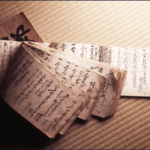
But there is a book that has remained from the Edo period. …… The store used to be called “Ninben Iseya,” and there are various books about the business and what to do with the house, etc., and there are words in the books that suggest what should be done. There are words that have been left behind, such as the way of thinking about business.
You don’t bother to say “family motto” but you mean ……. What exactly do you have in mind?
It is written in old books that you should never get tired of doing business, and that you should do your core business well.
You can expand your business area, but focus on the business itself and don’t do anything else that you don’t understand. …… But business is the most fun, isn’t it? If you say you shouldn’t get bored, does that mean that there have been people in the past who have gotten bored?
I think I might have been there. A little off the beaten path: ……. In the good old days, there were times when they spent quite a bit of money on different things. It’s all about cultural support, though. In my grandfather’s time, there were people who favored Kabuki and sumo wrestlers and gave them all their salaries.
Old shops stand at the intersection of economy and culture, don’t they? They are at the center of the local economy and local culture. Takatsu-san is holding festivals and other events, but they are very much in the tradition of long-established businesses.
We are a part of the community.
The founder started doing business with a samurai lord.
That’s right. We are aware that we are only as good as the city we live in. Now, I would like to ask you about innovation in this volume. How many major innovations did Niben-san have in 321 years?
The first innovation was our ability to successfully grab a large customer.
Is it like corporate sales?
Kaga Clan.
So that was the big order.
Yes, it was the founder who started doing business with those samurai lords.
Did they make a dive sale?
No, not quite. We took over the rights. I heard that he originally loaned money to another Iseya-san who had business with the Kaga clan, and that the person was unable to repay the money, so he took over the rights to trade with the various clans instead.
So that’s how it all started, that’s your first break.
That was one of the innovations during the first generation. After that, you started cash retailing, and not just to samurai families. In the Edo period, people didn’t get paid on the spot, but rather twice a year at the end of the year, on the tray and at the end of the year.
Cash flow will be bad.
I think that is quite possible.
It’s six months, right?
We may not be able to collect all the money, right? Therefore, the price is also relative, and each customer may be charged a different price.
It’s like, “This person can’t return it, so…
Retail sales to ensure cash collection
That’s where we decided to make it a cash retailer and set a fair price. We started taking cash on the spot, saying, “How much is one?
How many generations did you have?
It is also the first generation and founder of the company.
Genius.
As a result, yes. However, we were not the first to do that, but Echigoya and Mitsukoshi were the first. It is said that we were the first dried bonito flakes shop to do so.
It is indeed an innovation.
Moreover, incorporating innovations from other companies into your own company is a concept that can be fully utilized by today’s startups.
Yes, the importance of cash definitely holds true in this day and age. It is absolute.
I think they would have said something like, “What are you talking about? I think they said something like, “What are you talking about?
I’m sure.
But it means you’ve done it.
It’s important to say that you’ve done it. It is wonderful to see that you have determined that this is the way to go and to incorporate it properly.
What other innovations were there?
That was the beginning of success for the founder, but then there were tough times. This time, the feudal lords began to lose their control. They had been doing the “Sankinsho” (visiting the daimyo) for a long time, and their finances were no longer viable.
Isn’t that exactly what the Tokugawa family wants?
That’s right. The power has gone, and the townspeople are gaining power instead. They sold a new type of dried bonito flakes for the townspeople. I don’t know what kind of katsuobushi it was, but it is called “kajikibushi. Unlike the old dried bonito for samurai families, it was smaller and less attractive, but it tasted good and was sold widely and cheaply.
You call it a change in demand.
So the customers are changing. From samurai to townspeople.
You said that your early big clients were underperforming, and you discovered a new market, the townspeople. How many generations were you in when that happened?
This is from the first to the second and third generations.
It’s changing in such a span of time.
About 100 years?
We’re talking about 4 or 50 years, aren’t we? It’s like a market shift. Selling to corporate clients and selling to individuals separately is a totally different way of selling, isn’t it? If it were only Maeda-san’s company, you would say, “Thank you very much for your business! and go to that one company every day, but when you are selling to the townspeople, it is a very detailed operation.
With a history of more than 300 years, Nimben has seen major innovations at every milestone of the times. Building on the changes made there, the company steadily built up trust and achievements. It can be said that this attitude has led to the current Nimben.
latter part(temporal or logical sense) follow …
*If you would like to see this dialogue on video.here (place close to the speaker or where the speaker is)