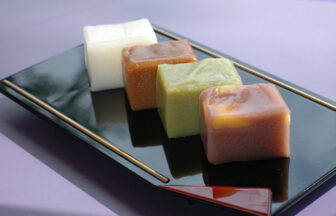
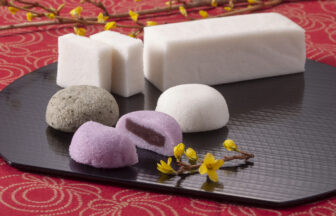
Before the Edo period, “Dedication confectionery” was a top-quality confectionery made with white sugar.

Japanese confectionery

Before the Edo period, “Dedication confectionery” was a type of confectionery made with white sugar.(Kenzyougashi/kenzyougashi)

A confectionery presented to the imperial family or court family. In the old days, white sugar was a precious commodity that could only be used by nobles, and after the arrival of sugar in the Muromachi period (1333-1573), it was used to refer to confections made with white sugar. Since the Meiji period (1868-1912), the term has come to refer to local confections selected by the Emperor as he traveled to various parts of Japan. All confections, including those made with azuki beans and wasanbon, are made in Japan and have an elegant and delicate appearance.

新着・おすすめ情報

  1. battledore (early form of badminton racket)

  2. Changing flavors and characteristics from generation to generation: the management strategy of the long-established “Tokiwando Thunder Stirrers’ Okoshi Honpo,” founded in 1816.

  3. Akatsuka Fudo Falls (Takashimadaira, Tokyo)

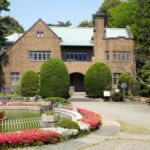
  4. Former Asakura Residence

  5. Sekiguchi Bashoan (Waseda, Tokyo)

  6. Habutae mochi

  7. Koishikawa Korakuen

  8. Ubukeya, a long-established cutlery shop with 240 years of history

  9. combined off-license and pub (licence)

  10. Arisugawa-no-miya Memorial Park

  11. grilled eel

  12. Tsukiji Honganji Temple

  13. Ubukeya is a knife store specializing in kitchen knives, scissors, and hairpins. The ultimate “sharpening” that even makes a paper-cutting artist say, “It’s so sharp, I’m in trouble!

  14. Can you guess what are the five colors of the “fukiage” that is attached to the top of the carp streamer?

  15. What is the origin of “May dolls” displayed on Dragon Boat Festival?