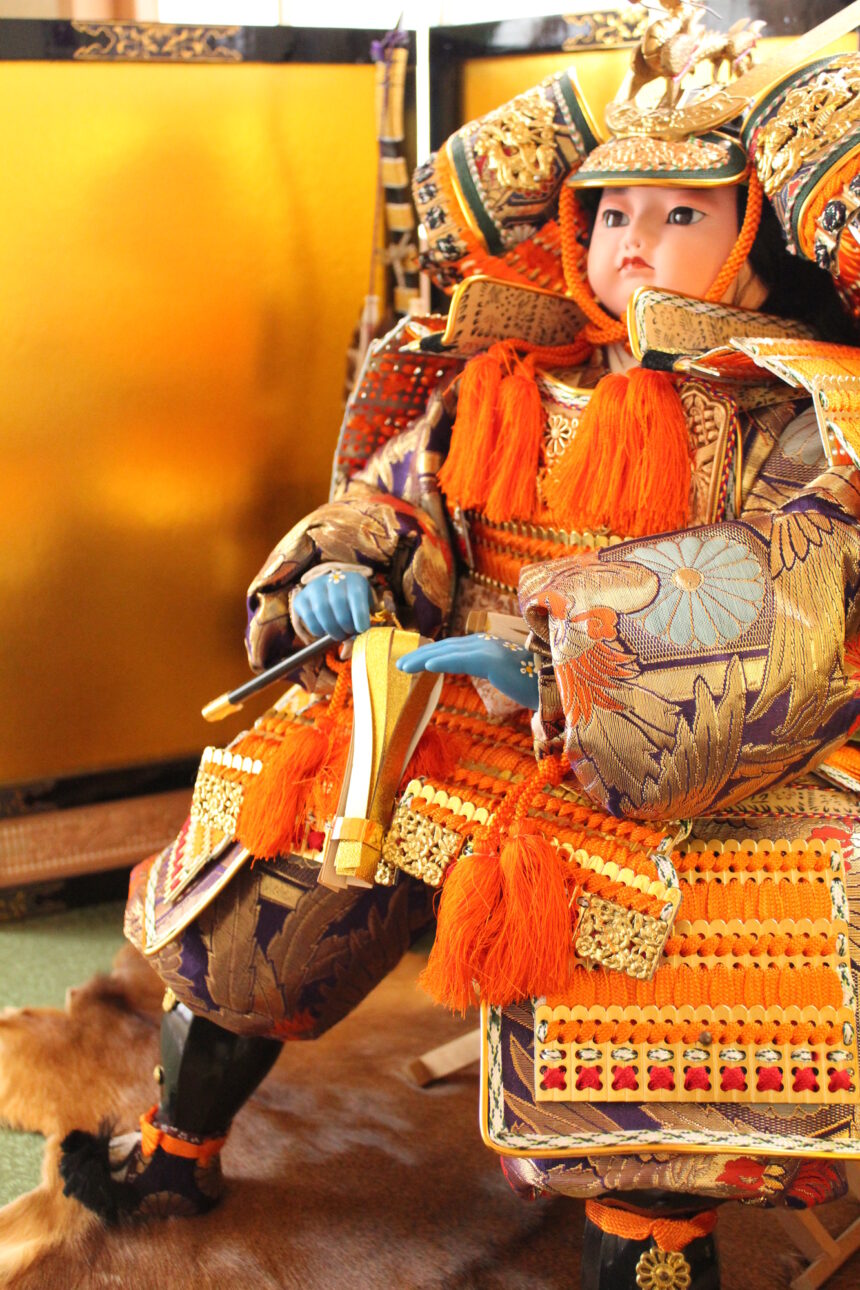
Samurai dolls” for Dragon Boat Festival. When did they come to be displayed?

puppet

Samurai dolls” for Dragon Boat Festival. When did they come to be displayed?(Musyaningyo)

Children’s Day (national holiday; May 5th)Boy’s Day celebration (May 5th)

A generic name for dolls with heroic figures displayed on Dragon Boat Festival. The custom of decorating dolls took root in the mid-Edo period, when doll making began to flourish. The dolls are modeled after Emperor Jinmu, the first emperor of Japan; Ushiwakamaru and Benkei, two military commanders dressed as generals; the heroes of old tales such as Kintaro and Momotaro; and Shoki, a Chinese god of war who protects children from plague and disease. The dolls were decorated with the hope that the heroes and heroic figures known to everyone would protect the children and that they would become such strong people. Before the Meiji period, dolls with adult faces were the norm, but recently the number of warrior dolls with cute children’s faces has been increasing.


新着・おすすめ情報

  1. The characteristics of “koshu” (old sake) explained [Words related to sake].

  2. Tokyo’s “Furyu Odori” is the talk of the town since it was selected as a UNESCO Intangible Cultural Heritage site! Tokyo’s “Furyu Odori” gathers in large numbers! Report on Tokyo Folk Performing Arts Festival

  3. brewing

  4. Sugamo Koshinzuka (Sugamo, Tokyo)

  5. part of the palace where important ceremonies were held

  6. Hanamaki soba

  7. Metropolitan Takiyama Park, Ruins of Takiyama Castle

  8. Ningyocho Shinota Sushi Head Office, a long-established sushi restaurant serving inari sushi. What changes with the times, and what never changes.

  9. With 670 years of history, yet unafraid of change. Shioze Sohonke” continues to innovate ambitiously.

  10. What kind of doll is “Oyama Doll”? What is the origin of the name?

  11. Oshima tsumugi weave

  12. 【第14回】江戸蕎麦の流儀〜道具立て編〜

  13. Tozenji Temple (Shinagawa, Tokyo)

  14. Musashi Ontake Shrine (Ome, Tokyo)

  15. Zoshigaya Kishimojin Hall