

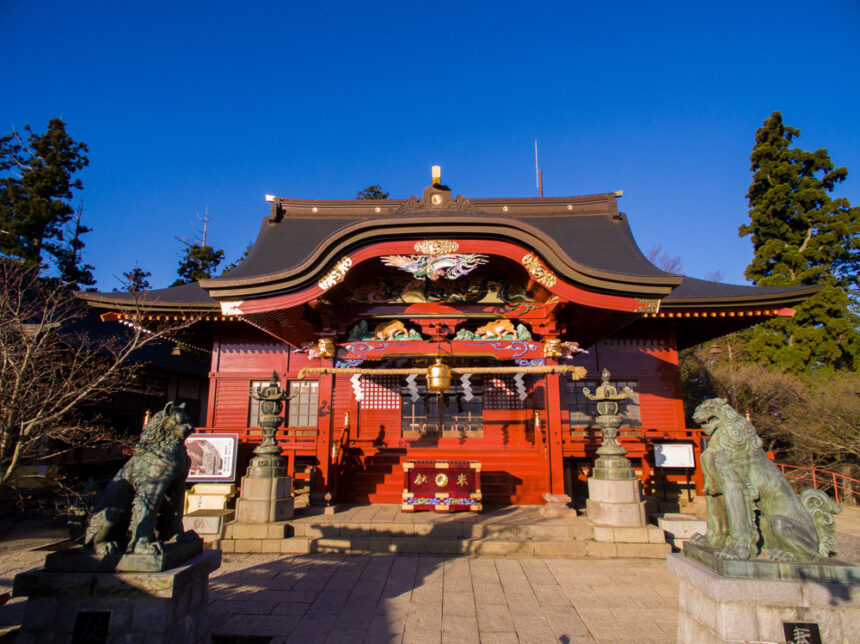
Shinto shrineHigashimurayama, Ome, Okutama
Musashi Ontake Shrine (Ome, Tokyo)(Musashi-mitake-jinja Shrine)
Mitake (929 meters above sea level). It is said that the shrine was established in the 7th year of the Emperor Sujin’s reign, when Takeunakawawawake no Mikoto enshrined Ohonamuchi no Mikoto and Sunahikonokono-no Mikoto when he conquered the eastern part of Japan. During the Nara period (710-794), a statue of Kongo Zao Gongen, the principal deity of mountain worship, was enshrined in the shrine, and when mountain worship flourished in the Middle Ages, the shrine flourished as the center of Zao worship in the Kanto region. In the Edo period (1603-1867), pilgrimages by the general public became popular, and “Utaki Ko” were organized in many places. The shrine is also known for its guardian deity, the wolf (Okuchimakami), and a talisman called “Inu-sama” depicting the wolf is popular as it is said to be beneficial for protection against theft and fire. Image courtesy of Musashi Ontake Shrine
Spot OutlineOutline
| address (e.g. of house) | 176 Mitakeyama, Ome-shi, Tokyo |
|---|---|
| Access | From JR Ome Line Ontake Station, take a bus to Ontake Tozan Railway Cable Car Takimoto Station, take the cable car up to Ontakeyama Station, get off, and walk 25 minutes. |
| phone | 0428-78-8500 |
| Business Hours | 8:30~16:30 (God’s talisman conferring place)/9:00~15:30 (Prayer reception) |
| External Links | |
| Founding and opening of business | 7th year of the reign of Emperor Sojin |