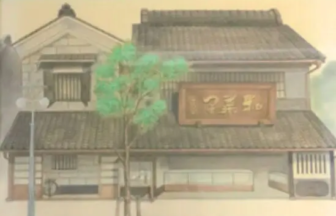
Tsutanoya” was established in 1937 and supports Japan’s fish-eating culture with its delicious taste. What is “Kyoka-zuke”, an evolution of Saikyo-zuke?

Shinjuku, NakanoKyoto-style picklesJapanese-style meal

Saikyo zuke is a very familiar food on the Japanese table, where the miso brings out the flavor of the fish. One of the signature products of Tsutanoya, a Japanese restaurant established in 1937 that has been in business for about 80 years, is “Kyoka-zuke,” a top-quality Saikyo pickles. What kind of ingenuity is put into “Kyoka-zuke,” which is also loved as a gift? How did they come up with unique products such as “Kyohana Sushi” and “Kyohana Smoked Fish”?

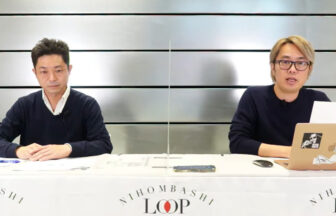
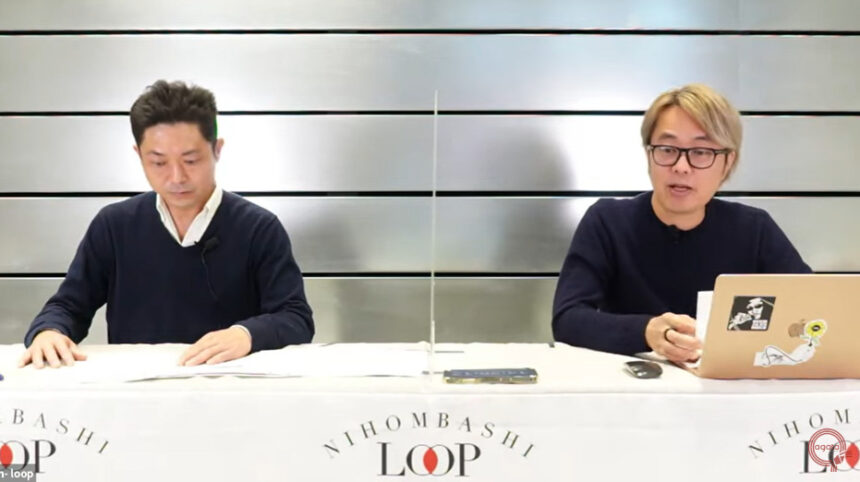
We interviewed Hideki Ichimada, the third generation head of the Tsutanoya family, about the reasons for the delicious taste of the Tsutanoya brand and the ingenuity of its branding.

Signature product “Kyoka-zuke” means “the fusion of Kyoto and Edo.

Please introduce yourself first.

My name is Hideki Ichimanda, the third generation of Tsuta no Ie. I was invited to join our company by my predecessor, and after working here for about 10 years, I was asked to change my generation. I am doing my best to develop new products while keeping our traditional products.

The restaurant was established in 1937 as a Japanese kappo restaurant in Yotsuya 4-chome and has been in business for nearly 80 years. We have been patronized by political and financial figures as well as celebrities, and we began to sell Saikyo pickles, which were loved by many of them, in response to their requests. Saikyo pickles are available in seafood and meat varieties, and we also offer affordable products for home use, such as boxed lunches.

We are a store that has built a long history in Yotsuya. Can you tell us more about your products such as Saikyo pickles?


Our Saikyo pickles, uniquely named “Kyo-Ka-Zuke,” are characterized by the use of “Miso-Doko,” which is mixed with secret “Kaeshidare,” a soy sauce-based mixture, and left to rest.

What is your commitment to the miso itself?

In addition to Saikyo miso, we blend two types of miso, including sweet Kyoto miso. Kaeshidare is added to this blend to create a unique flavor.

I see.

The character “Kyo” in “Kyouka-zuke” comes from Kyoto, the birthplace of Saikyo-zuke. Saikyo zuke began when fish was preserved in miso so that it could be enjoyed in Kyoto. Saikyo zuke originated in the Heian period (794-1185) and became popular around the middle of the Muromachi period (1333-1573).

Saikyo pickles have such a long history.

At first, only aristocrats and Buddhist monks were allowed to eat it, but over the years, it gradually spread to the general public. The “Kyo” in “Kyo Hana Zuke” refers to “Kyoto” and the “Hana” refers to “Hana no Oedo” (the “Flowery Oedo”), and the name represents the “fusion of Kyoto and Edo”.

Unique cutting method “Daimyo-kiri”.

We were told that “Kyoka pickles” are also particular about the way they are cut.

We use a method called “Daimyo-giri,” in which the fish is cut into fairly thick, square cubes. Not only does this give the fish a luxurious feel, but it also has the advantage of allowing the miso to soak in from around the fish as it is marinated, keeping the flavor of the fish in the center.

So you can taste the saikyo miso on the surface and the deliciousness of the fish in the center. Also, I heard that each slice is cut by hand. ……?

Yes, we do. Each slice is carefully soaked in miso by hand, and when it is fully soaked, it is carefully wrapped in gauze and shipped.

How long does it take to make one product?

The marinating time varies depending on the type of fish, but it takes about 3 to 4 days. We also offer sliced fish, but the marinating time is a little shorter.

Can you tell us more about the variety of your products?

There are three types of Daimyo-kiri products. Each is named “Moso bamboo split lid,” “Sudare-maki,” and “Bamboo bark wrapped,” and the differences are the size of each slice and the part of the fish. The highest quality “Moso Bamboo Split Cover” is made from the breast of the fish, and the more affordable one is, the closer to the tail fin you can imagine.

What are the characteristics of products using the chest?

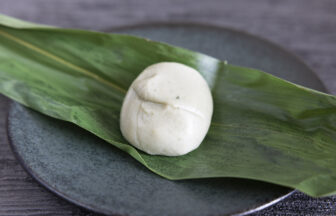
Since it contains a large amount of belly meat, it also has a high fat content. The “Moso bamboo split cover” is wrapped in a “bamboo tube” and wrapped in a furoshiki (wrapping cloth) as a gift, the “Sudare-maki” is wrapped in a “sudare” as the name suggests, and the “Bamboo bark wrapped” is wrapped in a “bamboo skin”. The “bamboo skin wrapping” is wrapped in “bamboo bark” and each has a different packaging.

Although the bamboo skin is also a good texture, the “Mousou bamboo split lid,” which is made of moso bamboo, will make the recipient of the gift even more happy.

Unique products are created through daily trial and error.

What other products does Tsuta no Ie offer besides Saikyo pickles?

There are various types of common sliced products such as sea bream, gindara, Spanish mackerel, salmon, and melon.

Tarako (cod roe) pickled in saikyo is a rare product.

Yes, it is. This is the product with the longest marinating time. We also have another product called “Kyo Hana Sushi,” which is made with saikyo pickled mackerel, grilled, and served as sushi. We use “red” vinegared rice, which is a blend of black and white rice, to make it a healthier product.

How are these unique products conceived?

Kyoka Sushi” was born from the idea of “Since we have delicious saikyo pickled mackerel, let’s try making it into sushi” while we were experimenting with various pickled foods on a daily basis. It has been more than 10 years since then, but the product was born through repeated prototyping.

It is a product with originality that is different from popular sushi such as battera.

Tsuta-no-ie” has always been pursuing originality while creating delicious products, such as “Kyoka-zuke,” a unique evolution of Saikyo-zuke. It takes longer than expected to complete each product, and even so, they insist on handmade products. Therein lies our straightforward and sincere desire to “provide truly delicious food to our customers.

latter part(temporal or logical sense) follow …

*If you would like to see this conversation on video.here (place close to the speaker or where the speaker is)

新着・おすすめ情報

  1. The important thing is to build a steady network. Nakazawa Nyugyo Co., Ltd. is expanding its business with the spirit of “Be with each other and do business with each other.

  2. Imado Shrine (Asakusa, Tokyo)

  3. Shirokiya Denbei

  4. 【羽二重団子】季節限定商品「いちご団子」

  5. kasuri

  6. Atago Shrine

  7. Habutae mochi

  8. When do we display the “Akumayumi” outside of Children’s Day? Explanation of its origin

  9. Nara Ningyo” is characterized by the powerful touch of a single sword digging. What is the meaning behind it?

  10. Hoonji Temple (Kinshicho, Tokyo)

  11. gore

  12. Okadaya Fuse” has a history of 188 years.

  13. Togenuki Jizoson Takaiwanji Temple (Sugamo, Tokyo)

  14. Eitaro Fuhonshop located at the foot of Nihonbashi Bridge. Traditional techniques and a desire to “create new wagashi

  15. Ruins of Hachioji Castle