Shimbashi Tamaki-ya has been in business for 240 years, and serves everything from tsukudani (food boiled in soy sauce) to glaces to add color to Japanese and Western dining tables with its “Hikiku, Gentle, and Warm” service.

Shinbashi, Shinagawa, Odaibapreserved food boiled in soycooked beans

Tsukudani and ochazuke are perfect for warm rice. Surprising Western-style furikake that have been talked about in many media. Akinatai Guerande Salt and Fig Glace that match with wine. …… Shimbashi Tamakiya has been in business for 240 years, and continues to produce food products that add color to our dining tables with the skill and vivid sensibility of a long-established company. Starting with the history and motto of Shimbashi Tamakiya, we interviewed the tenth generation, Kyoko Tamaki, about the secrets of their innovation.

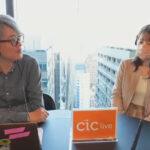
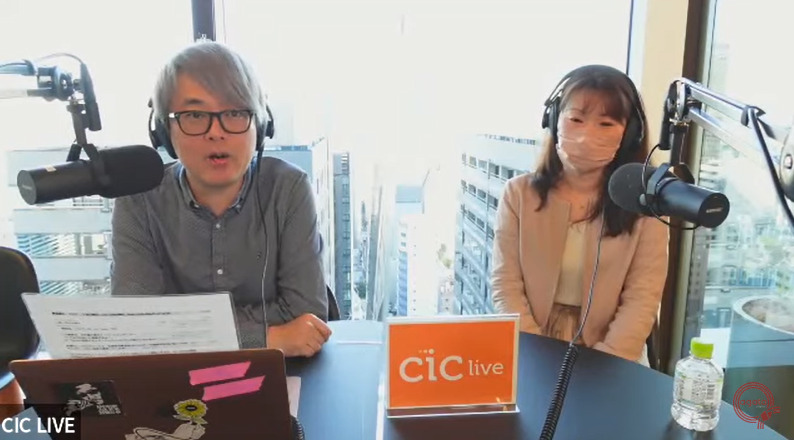
Mr. Hayashi:Thank you very much for your time today. Could you introduce Shimbashi Tamakiya to us immediately?

Mr. Tamaki:Actually, today (*interview is April 6, 2022) is the anniversary of the founding of the company.

Ms. Hayashi: That’s great!

It has been exactly 240 years since Shimbashi Tamakiya was founded on April 6, 1782, during the reign of the 10th Tokugawa Shogun Ieharu and his old lieutenant Ietsugu Tanuma. As it was the 2nd year of the Tenmei Era, some of you may be familiar with events such as the Great Famine of the Tenmei Era and the eruption of Mount Asama from history textbooks.

It is really amazing.

Mr. Tamaki: It all started when Shichibei Tamaki, the first generation, came to Edo from Niigata and sold black beans boiled in soy sauce and sugar using a method he learned from a Zen monk, carrying a balance pole around the city of Edo.

At the time of its founding, it was a “zazen bean*” store. And the next picture is an image that is rather close to the modern era.

*A dish of black beans or soybeans sweetened with soy sauce and sugar. Zazen-mame.

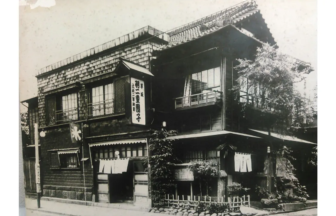
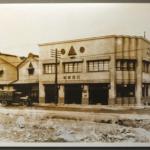
This photo was taken in the late Edo period to mid-Meiji period. Tamakiya’s first store was located in the middle of the old Tokaido Highway leading from Shinagawa-juku (left) to Nihonbashi (right). The building in the center of the photo is the one with a man standing in front of it.

This photo was taken from a fairly high vantage point. It is the kind of angle of view that I would like to take with a drone now. What is the next photo?

This is a picture of customers lining up at the end of the street for the zazen beans in the mid- to late-Meiji period.

That’s a huge line. It was really a very popular product.

That’s right. At that time, Shinbashi was a very glamorous Hanayagi district, and I heard that Shinbashi geisha used to come to share the boiled broth of zazen-mame because it was said that their voices would come out very well if they drank the broth before going up to the tatami room.

I see. And here is the next picture.

This is an early Showa period view of the area around the current store*, which leads from the Shimbashi intersection to Ginza’s Chuo-dori Avenue.

*The store will be relocated to Shinbashi 4-chome in 2022.

This is just where the streetcar used to run.

Yes, there is a train in the picture as well. Also, what I think is great is that you can see hand signals with “Tomare” etc. written on them.

Mr. Hayashi: Back then, they used to switch signals by hand, that’s amazing. It’s still a very big intersection, isn’t it? And what is the next picture?

Tamakiya’s tsukudani continues to this day. Shichibei III devised a tsukudani with a unique flavor, and it has continued to this day.

Shimbashi Tamakiya is known for its tsukudani. I am sure you are all familiar with it. What did Mr. Tamaki, now in his 10th generation, have in mind when he decided to take over such a long-established business?

Review taste in a 10-20 year span.

My brother, sister, and I are three siblings, and my mother, who is currently the chairman of the board, was the ninth generation. My mother had originally married into the Tamaki family, but my grandfather had chosen her to take over the business on short notice, and my brother helped out while attending college. My older sister also graduated from an accounting school and is now working as a general accountant, so it was a natural progression for me to join Tamakiya right after I graduated from junior college at the age of 20. I love the customer service industry, and I have always worked in the customer service industry, even when I was in high school.


Did you ever have conversations about who would take over the business among the three siblings?

My brother was sickly and passed away at the age of 32. He started fighting his illness a little after I joined the company. So since that time, my mother, my sister, and I, all women, have supported each other and worked hard.

Is there any family motto that supports Tamakiya?

After my mother joined the company, we began to review the taste and develop new products over a span of 10 to 20 years under the motto, “Delivering delicious food to everyone. Tsukudani was originally a preserved food, so it used to be much saltier. Also, when it comes to customer service, “We are always looking for new ways to serve our customers.HIKUIKU, GENTLE, WARMThere is a word “hospitality”. I love the customer service industry and have experienced many things in it, and I think it is the essence of what it is all about.

It’s a nice word that kind of makes you want to say it.

We want to value this kind of feeling not only toward our customers, but also among the staff who work with us.

Mr. Tamaki always treats me kindly when I go to talk to him, and I feel that the spirit of “Hikuku, Kindly, and Warmly” flows through him as well. The theme of “delivering delicious food to everyone” is quite a challenge for a long-established business that has to keep up with the changing tastes of the times.

Taste is a really difficult subject because everyone’s sense of taste is so individual. That is why I think that when my mother joined the company, she set up a call to “deliver delicious food to everyone” as the axis that we should all aim for. After all, the palates of people in their 70s 20 years ago are different from those of people in their 70s today.

You are right.

I think that in order to deliver something that fits the background and eating habits of the times, we must continue to pursue taste all the time.

Mr. Hayashi: For long-established restaurants, there are so many different things that they do and don’t change, so I learn a lot from what you say. However, I think that food has to keep up with the times.

That’s true. My mother changed the salty taste little by little over a span of 10 or 20 years so as not to disappoint the current customers. I also try to take care of our current customers while also looking ahead to the future.

latter part(temporal or logical sense) follow …

*If you would like to see this dialogue on video.here (place close to the speaker or where the speaker is)

新着・おすすめ情報

  1. New Products] Kuromame Chocolate (limited quantity, on sale 2/3) / Ebiya Sohonpo

  2. Kamiya Bar

  3. Sengakuji Temple

  4. Sensoji Temple

  5. Rikugien

  6. What is the definition of “Honjozo”? Words related to Sake

  7. special brewing

  8. Points to keep in mind when going out on a rainy day. Handling of umbrellas, considerations on trains and visiting places, etc.

  9. Samurai dolls” for Dragon Boat Festival. When did they come to be displayed?

  10. How do you read “shicho”? What do the different expressions mean? Hina Dolls

  11. What’s in a Kaiseki meal? Explaining the Difference from Kaiseki Cuisine

  12. What does a “prop maker” do? The Craftsman Who Creates Puppets Series

  13. Lengshan (dynasty of China; 386-589 CE)

  14. Toshimaya Sake Shop

  15. Kanda Yabusoba (Eating / Kanda area) page is now open