Kurume Kasuri

Japanese clothing

Kurume Kasuri(kurumekasuri/kurumekasuri)

Japanese clothesclothing

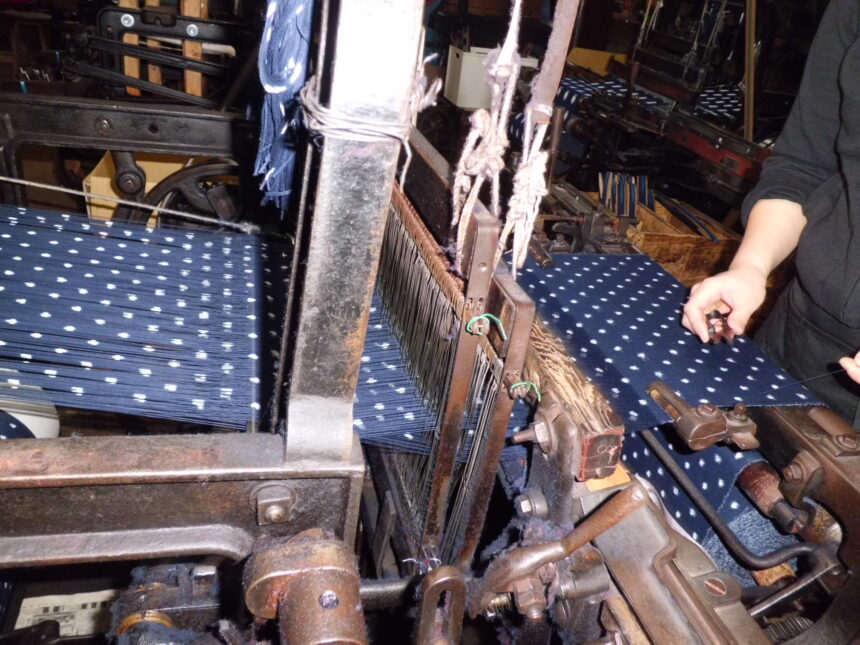
This textile was made as a side job for farmers in the Chikugo region centered on Kurume City, Fukuoka Prefecture. Cotton threads are knotted and dyed with indigo, and a kasuri pattern is woven by hand. The patterns include geometric and pictorial (picture and character) patterns, and are classified into small, medium, and large patterns according to size and number of patterns. Kurume kasuri was born around 1800 (late Edo period). A young girl named Den Inoue noticed a white speckled pattern on faded old clothes and came up with the idea of creating a pattern by binding and dyeing threads from them. As this technique spread, people invented new patterns, and after the Meiji period (1868-1912), it spread throughout Japan as a common people’s kimono. Along with Iyo-kasuri and Bingo-kasuri, it is also known as one of the three most popular kasuri in Japan.

新着・おすすめ情報

  1. What is included in “chopstick washing” in kaiseki cuisine? In what order are they served?

  2. Katori Shrine, Kameido, Tokyo

  3. 浅草

  4. stalk (of a mushroom, leaf, etc.)

  5. Sword eyelets become one-of-a-kind accessories. Nihon Katana, a long-established store specializing in swords that you can enjoy even if you are not an enthusiast.

  6. Shinobazunoike Pond Oratory, Kan-eiji Temple

  7. Sekiguchi Bashoan (Waseda, Tokyo)

  8. What is the difference between “Ginjo-shu” and “Junmai Ginjo-shu”? Words related to sake

  9. condition of health

  10. long-sleeved kimono

  11. (sound of) the wind through pine trees

  12. 徳丸北野神社(東京・板橋)

  13. What is the origin of the term “chilled sake”? Words related to sake

  14. duck meat stew (dish from Ishikawa prefecture)

  15. Nihonbashi Kuroeya deals in lacquerware from all over Japan. Protecting the goodwill through innovation, not single-mindedness.