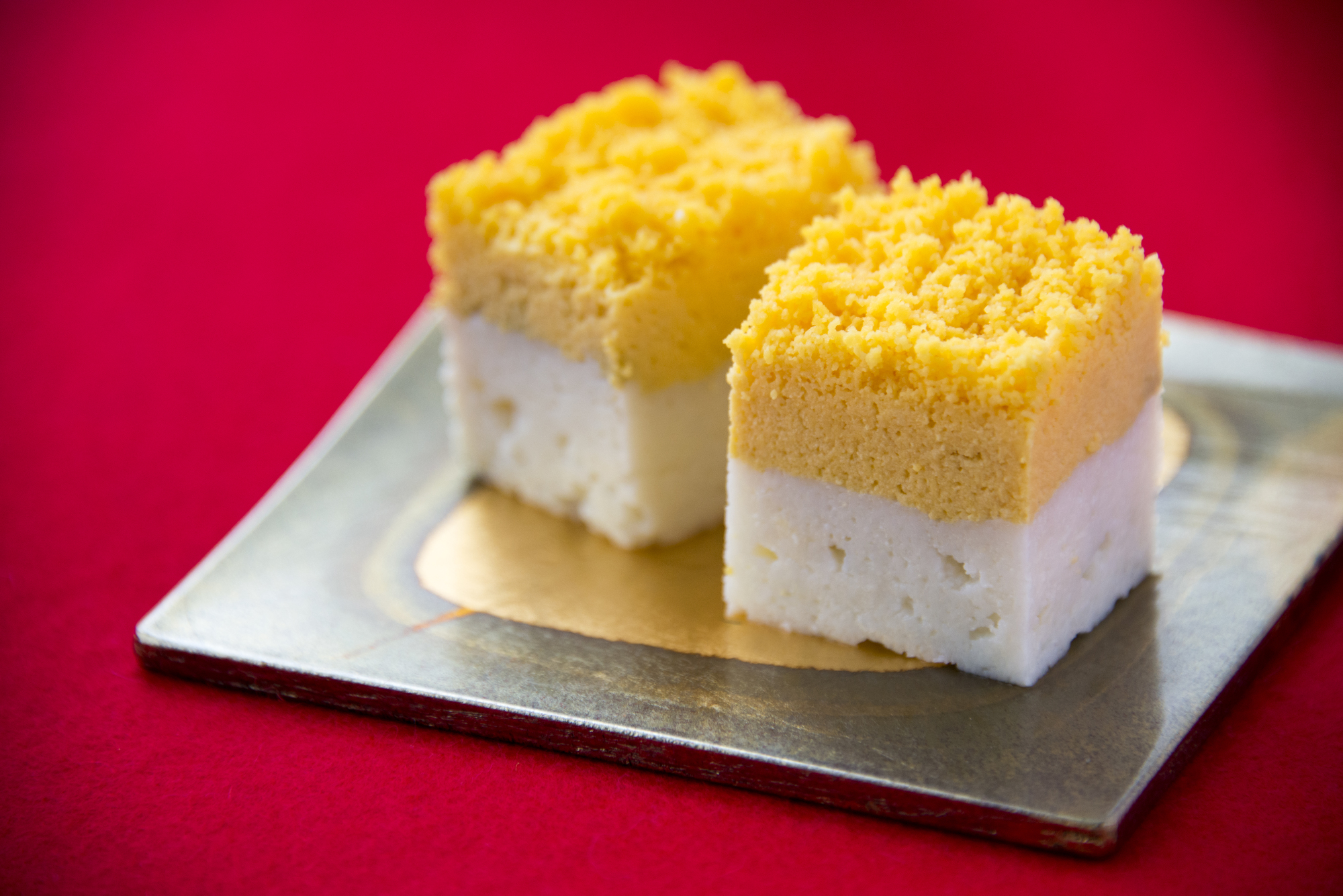
What is “Nishiki-Tamago”? What is the origin of its name?

Japanese-style meal

What is “Nishiki-Tamago”? What is the origin of its name?(Nishikitamago)

food served during the New Year’s HolidaysNew Year

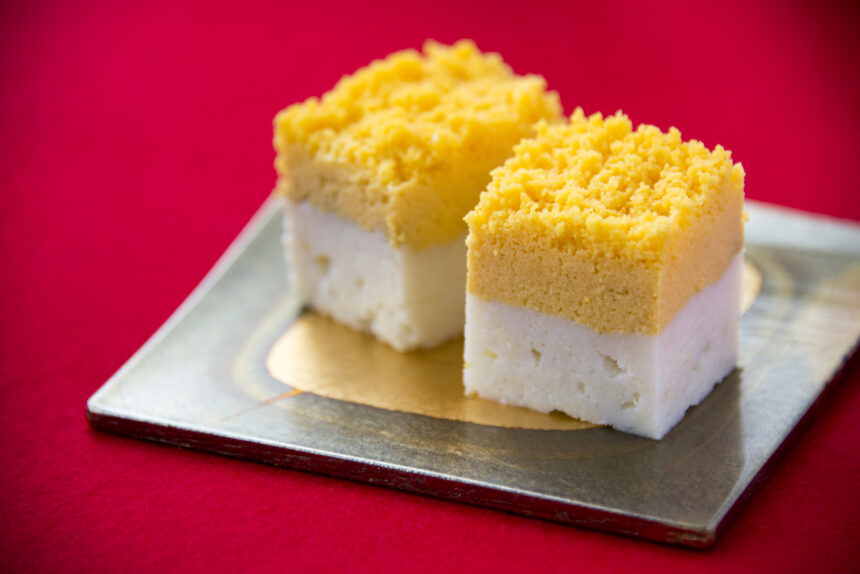
Boiled eggs are separated into yolk and white while still hot, seasoned with sugar, salt, potato starch, etc., and then steamed in two layers, the yolk and white on top and bottom. The yolk and white are separated and seasoned with sugar, salt, potato starch, etc., and the yolk and white are steamed in two layers. It is considered to be a food of good luck, and is known as a typical dish for Osechi and festive meals. The name “nishiki tamago” (broiled egg) was coined from the word “nishiki” (brocade), which refers to the elegant and festive textile fabrics, with the yellow yolk resembling gold and the white yolk resembling silver.

新着・おすすめ情報

  1. Meishu no Taki Park (Oji, Tokyo)

  2. A Walk in Edo with Old Maps] No. 6: Kagurazaka is full of historical attractions. From alleys where you can feel the Edo period to wooden buildings of the Showa period

  3. Yagiri no Ferry (Shibamata ferry terminal)

  4. Sainenji Temple (Tomb of Hattori Hanzo) (Yotsuya, Tokyo)

  5. (silk) crepe

  6. New Year’s gift (usu. money given to a child by relatives and visitors)

  7. Ruins of Hachioji Castle

  8. Developing original materials with attention to detail, starting from the fabric. Shukusen, a long-established yukata manufacturer loved by kabuki actors in the Edo period [Part 2

  9. Philosophical Hall Park (Araiyakushi, Tokyo)

  10. When do we display the “Akumayumi” outside of Children’s Day? Explanation of its origin

  11. Tanashi Shrine (Tanashi, Tokyo)

  12. Zen monk, 1200-1253

  13. New Year’s decorations

  14. Walking with the owner of a long-established restaurant and an expert] Part 1: Tracing the history of Shibadaimon with the 7th generation owner of “Shibadaimon Sarashina Nunoya

  15. 【第1回】蕎麦の実の殻を完全に取り除いて作る「江戸蕎麦」