revitalization

Japanese confectionery

revitalization(Okoshi)

Osaka

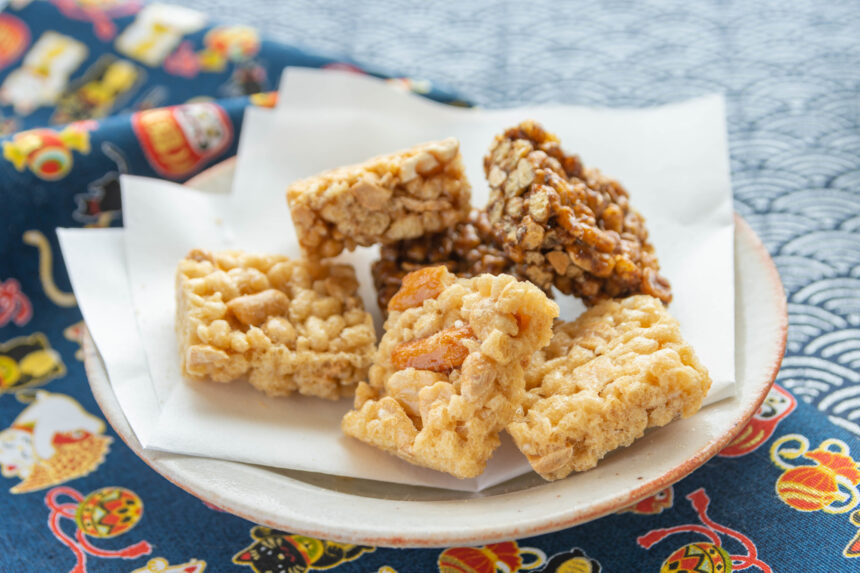
Dried sweets are made by steaming glutinous rice, Uruchi rice, millet, wheat, etc., drying them, roasting and puffing them, mixing them with sugar, syrup, etc., and kneading them into a hardened dough. Various types of okoshi are available, including those with sesame, black beans, peanuts, and other ingredients. Kamini-okoshi, a specialty of Asakusa, Tokyo, and millet okoshi, a specialty of Osaka, are well-known. The history of okoshi dates back as far as the Chronicles of Japan, which records that it was made by hardening dried boiled rice called “dried boiled rice” with honey as an offering to the gods as a prayer for a bountiful harvest. In the Edo period (1603-1867), it became a popular snack for the common people.

新着・おすすめ情報

  1. Katsusenji Temple Enma Opening in Kitasenju! A New Year’s tradition with stalls on the first Enma day

  2. Manners for Late-Summer Greeting Cards in 2023: Common Sense to Know and Sample Cards for Different Recipients

  3. Hanazono Shrine

  4. man’s stiff sash

  5. bush

  6. Tsutanoya” was established in 1937 and supports Japan’s fish-eating culture with its delicious taste. What is “Kyoka-zuke”, an evolution of Saikyo-zuke?

  7. Ome Shinmachi Oido (Ome, Tokyo)

  8. Japanese dessert consisting of two slices of kasutera (sponge cake) with red bean jam in between

  9. Toyokawa Inari Tokyo Betsuin (Akasaka, Tokyo)

  10. What nutrients are contained in “buckwheat tea” that are good for the body?

  11. part of the palace where important ceremonies were held

  12. manjuu

  13. What is the definition of “Honjozo”? Words related to Sake

  14. Hibiya Park

  15. Kimono can be re-tailored and reused as a haori or obi. Kimono is the ultimate SDGs costume.