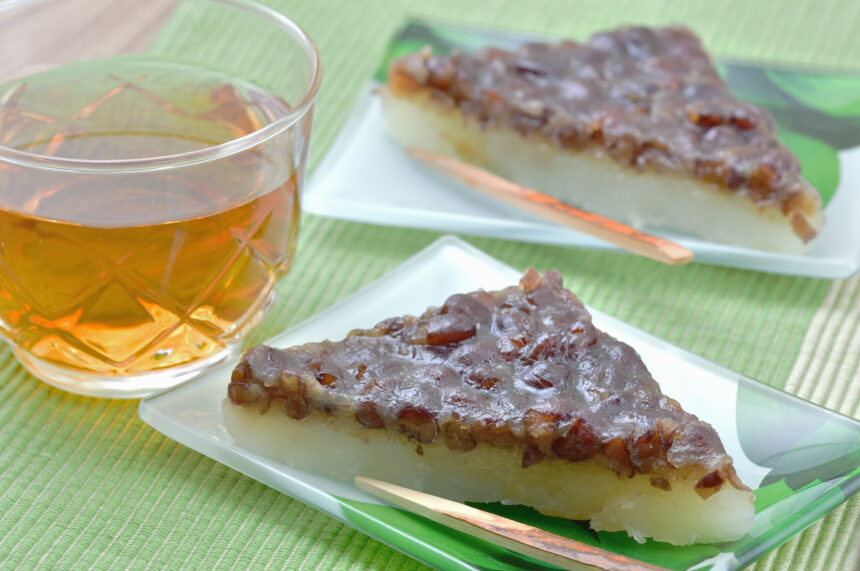
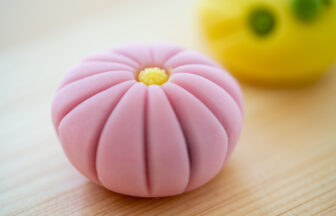
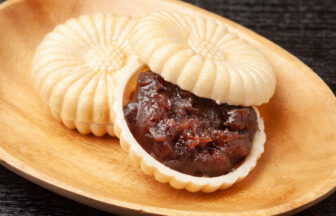
triangles of sweet rice jelly topped with adzuki beans (eaten in the sixth month)

Japanese confectionery

triangles of sweet rice jelly topped with adzuki beans (eaten in the sixth month)(Minazuki)

warding off evilsummerEdo-period herbal medicine (used as an antitussive and a breath freshener)adzuki beans

A Japanese confectionery made of white dough (uiro), sprinkled with azuki beans, and cut into triangles. It is named after “mizunatsuki,” which means June in the lunar calendar, and is eaten mainly in Kyoto on June 30, the day of “Natsukoshi-no-harae” (purification ceremony to purify the body over the summer). Natsukoshi-no-harae” is an event held at shrines to purge the impurities of the first half of the year, and this sweet is eaten to pray for good health for the remaining six months of the year. Some people believe that the triangular shape of the sweets is made to resemble ice, while others believe that the triangular shape is made by cutting a square in half to represent half of the year. The red color of the azuki beans is also believed to ward off bad luck.

新着・おすすめ情報

  1. What is the origin of the name “Yamato Doll”? What kinds of dolls are there?

  2. Nezu Shrine (Nezu, Tokyo)

  3. Sekiguchi Bashoan (Waseda, Tokyo)

  4. What is the origin of the term “chilled sake”? Words related to sake

  5. common variety of women’s kimono sash

  6. What is “Uguisumochi”? Which season is it?

  7. 【老舗ご当主・識者と歩く】日本推しラトビア人アルトゥルさんと虎ノ門−新橋の老舗をめぐる

  8. To preserve traditional culture, we also consider the treatment of craftsmen. What does the long-established “Edoya” think of “succession”?

  9. unlined kimono

  10. steamed fish-paste cake, sliced to decorate soup (type of kamaboko)

  11. Kawaramachi Inari Shrine (Kitasenju, Tokyo)

  12. 【第17回】「田舎蕎麦」と「更科蕎麦」の違いとは

  13. Musashi Fuchu Kumano Shrine Tomb (Fuchu, Tokyo)

  14. Kiyosumi Garden

  15. 【第5回】東京から静岡へ 蕎麦店の系譜と受け継がれる蕎麦作りの伝統