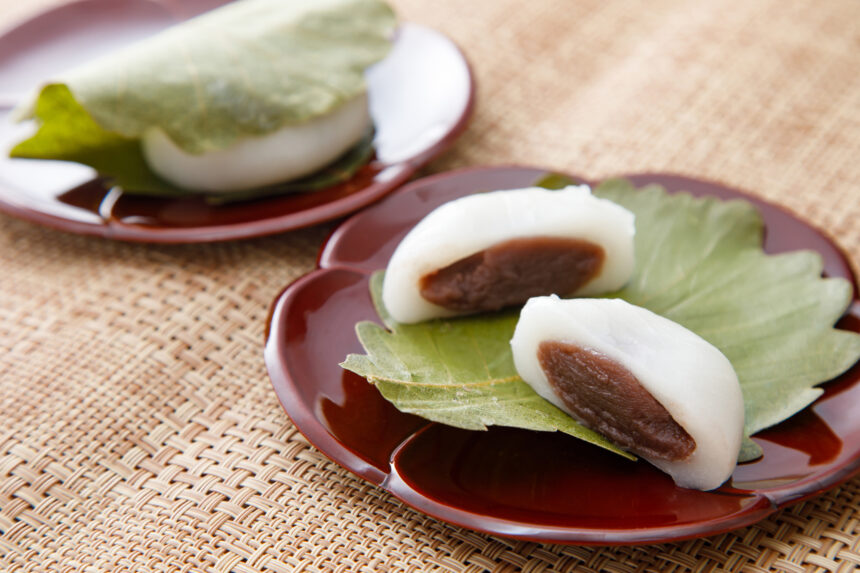
Why is the oak in “Kashiwa-mochi” said to symbolize the prosperity of descendants?

Japanese confectionery

Why is the oak in “Kashiwa-mochi” said to symbolize the prosperity of descendants?(Kashiwamochi)

red bean pasteChildren’s Day (national holiday; May 5th)springBoy’s Day celebration (May 5th)

A Japanese confectionery made from rice flour, flattened into an oval shape, filled with azuki bean or miso bean paste, wrapped in an oak leaf and steamed. Chimakis are eaten on the same day, but chimakis are eaten mainly in the Kansai region, while kashiwa-mochi is eaten mainly in the Kanto region.
The oak tree has long been considered a sacred tree, and since the old leaves do not fall off until new shoots appear, it is considered a symbol of “prosperity of offspring” and spread mainly in Edo (Tokyo) as an auspicious food on Tango-no Sekku (May 5).

新着・おすすめ情報

  1. Japanese sweets in the form of long blocks (e.g. yokan, uiro)

  2. When did the Hina Matsuri (Peach Festival) begin?

  3. A Walk in Edo with Old Maps] No. 6: Kagurazaka is full of historical attractions. From alleys where you can feel the Edo period to wooden buildings of the Showa period

  4. Ruins of Musashi Kokubunji Temple

  5. rolled sushi with rice and other ingredients

  6. What kind of doll is “Oyama Doll”? What is the origin of the name?

  7. Japanese yam (Dioscorea japonica)

  8. vertical or granny knot

  9. Inheriting the craftsmanship of making each toothpick one by one. Commitment to “Nihonbashi Saruya,” the only toothpick specialty store in Japan

  10. wheat starch

  11. Ruins of Otama-ga-ike Pond

  12. Inari Onio Shrine (Shinjuku, Tokyo)

  13. sweet red-bean soup

  14. When should I send out my summer greeting cards in 2023? Is it OK to send it by e-mail? Common sense and examples of sentences you should know

  15. Continuing to exist is a brand. What “Nihonbashi Saruya,” a toothpick specialty store, thinks a brand should be.