Hanamaki soba

Soba/Udon

Hanamaki soba (buckwheat noodles)(hanamakisoba)

laver

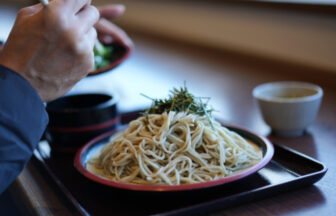
Kakesoba with a sprinkling of Momi Nori (dried laver) on top. The name “Hanamaki Soba” was derived from the image of cherry petals sprinkled on top of the buckwheat noodles. Some say that the name “Hanamaki” was derived from the fact that the seaweed was compared to a flower on the rocky shore and sprinkled on top of it. It is said to have been invented in the Edo period (1603-1868), and is described in “Morisada Manuscript,” a book on customs and culture in the late Edo period (1603-1868), as “Hanamaki: Asakusa Nori wo Aburi to Mabu Kafu” (Aburi and rubbed with seaweed).

It is often served in a bowl with a lid, and when the lid is opened, the aroma of the sea can be enjoyed along with the steam. To enjoy the aroma of the seaweed and the soba flavor, wasabi (Japanese horseradish) is usually used as a condiment instead of green onion.

新着・おすすめ情報

  1. Tokyo Station Hotel (Marunouchi, Tokyo)

  2. What are the characteristics of Edomae Sushi?

  3. Fuzoku ningyo” are dolls that reflect the customs of various regions in Japan. There are Edo genre dolls, Kyoto dolls, etc.

  4. part of the palace where important ceremonies were held

  5. Toyokawa Inari Tokyo Betsuin (Akasaka, Tokyo)

  6. The ninth generation of a long-established soba restaurant teaches how to boil and taste truly delicious soba noodles

  7. 【第3回】蕎麦の香りを楽しめる蕎麦メニューとは

  8. Ruins of Suzugamori Penitentiary (Omori, Tokyo)

  9. Sohonke Sarashina Horii, a soba restaurant with a long line. The taste that they have arrived at in pursuit of the possibility of buckwheat noodle

  10. pickled ginger

  11. beef sinew stewed in miso and mirin

  12. Former Residence of Soseki Natsume (Cat’s House)

  13. lay or stretch out to dry

  14. Abiru Shrine (Akiruno, Tokyo)

  15. Rintsushinomori Park (Musashikoyama, Tokyo)