Japanese sweets in the form of long blocks (e.g. yokan, uiro)

Japanese confectionery

Japanese sweets in the form of long blocks (e.g. yokan, uiro)(saomono)

Edo-period herbal medicine (used as an antitussive and a breath freshener)sweet bean jelly

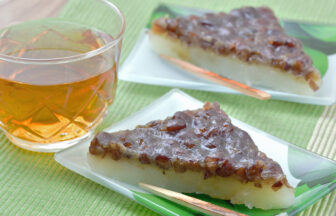
The name refers to long, thin, stick-shaped Japanese confections such as yokan (sweet jelly) and uiro (sweetened soybean flour). The origin of the word “yokan” is said to have come from the name of the mold used to make yokan, which is called “fune” in Japanese, and is used for the mold to be poured and hardened. The original way to count them was to say “一棹” or “二棹”, but nowadays it is more common to count them as “一本” or “一個”. There is a technical beauty unique to the zao-mono, such as patterns or seasonal scenes on the cross section of the zao-mono.

新着・おすすめ情報

  1. Samurai dolls” for Dragon Boat Festival. When did they come to be displayed?

  2. What’s in a Kaiseki meal? Explaining the Difference from Kaiseki Cuisine

  3. Meaning of “Unaju” and “Unadon”. What’s the difference?

  4. Shofukuji Temple (Higashimurayama, Tokyo)

  5. The family motto is “Be a connoisseur. Gyokuho-Do” has continued to support the tea culture by handling tea utensils of the Unshu-Matsudaira and Omotesenke families.

  6. kasuri

  7. Zuijin” is a male doll that serves as an escort for O’naira-sama [Hina Dolls].

  8. swallowing a great amount of tea or medicine

  9. ramen

  10. How is doburoku made? Words related to sake

  11. skewered eel roasted and wrapped in fried egg

  12. What is the origin of the term “chilled sake”? Words related to sake

  13. Uiro

  14. When did the Hina Matsuri (Peach Festival) begin?

  15. pongee (soft thin cloth woven from raw silk)